Showing posts with label Sysco. Show all posts

Saturday, July 31, 2010

Black bean and corn salad

On my last day at work before taking a week-long vacation, the thermometer topped 100 degrees in Sacramento. I made three salads for lunch as a replacement for soup. I usually forgo the soup once it gets over 95 degrees.

My "salad fest" included a black bean and corn salad. Instead of consulting recipe resources in my office, I tossed the salad together as I found appropriate ingredients in the refrigerator and pantry.

I also served a vegetable salad made with a 4-pound bag of Sysco California blend vegetables. To prepare, I blanched the vegetable in boiling water for a few minutes, drained and cooled in ice water. The cold vegetables were then tossed in a couple cups of Italian dressing.

A tossed romaine salad rounded out the menu. The main course consisted of cheese tortellini with marinara sauce.

The residents loved the salad offerings. "That black bean salad was hecka good," said one of the older ladies. A second resident added this note: "Have I ever told you how much I love that stuff?"

BLACK BEAN AND CORN SALAD

Use 3-1/4 cups frozen corn, 6 Roma tomatoes, 1/2 large red onion and 1 large red bell pepper if you don't have a scale.

Salad:

2 (28-ounce) cans black beans, drained and rinsed
1 pound frozen whole kernel corn, thawed
1 pound tomatoes, seeded and diced
8 ounces chopped red onion
8 ounces diced red bell pepper
3 jalapeno chili peppers, minced
1/2 cup chopped cilantro

Dressing:

1 tablespoon dried oregano
2 teaspoons paprika
1 teaspoon ground cumin
1 teaspoon granulated garlic
1 teaspoon kosher salt
1/2 teaspoon ground black pepper
1/2 cup red wine vinegar
1 cup extra virgin olive oil

Combine beans, corn, tomatoes, onion, bell pepper, jalapenos and cilantro in large bowl. Toss to mix well.

Combine oregano, paprika, cumin, garlic, salt, black pepper and vinegar in small bowl. Add olive oil to vinegar mixture and whisk to combine. Drizzle dressing over salad and stir to combine.

Recipe yields about 3-1/2 quarts or 25 (1/2-cup) portions.

Monday, June 07, 2010

Southwest green beans for a crowd

Here's a recipe for green beans that one of our residents shared with me last month. I like it because it adds a healthy flavor punch to the green beans.

The resident, an accomplished cook, offered this advise:

"The more crispier the bacon, the better. The longer you cook it, the better"

I agree. The bacon with its rendered fat, tomatoes and chicken base all work together to form a rich sauce for the beans. The jalapeno adds punch to the dish.

SOUTHWEST GREEN BEANS FOR A CROWD

Sysco sells 12 (2-pound) packages of frozen green beans in each case. For a vegetarian dish, saute the onions and tomato in butter or olive oil. Vegetable base can be used in place of the chicken base.

8 ounces bacon, diced
1 medium onion, thinly sliced
3-4 jalapeno chilies, minced
5 tomatoes, diced
2 tablespoons chicken base
4 pounds frozen green beans
Black pepper, to taste
1 cup chopped cilantro

Saute bacon in a large saute pan over medium heat until crisp. Remove bacon to a folded paper towel. Reserve bacon for later.

Drain all but 3 tablespoons of the bacon fat. Add onion and jalapeno chilies and cook until lightly browned, about 5 to 8 minutes. Add tomatoes and simmer until tomatoes break down render their juices. Add chicken base and pepper and stir.

Add beans. Stir, cover and cook until beans are crisp tender, about 15 to 20 minutes. Stir in cilantro and bacon. Adjust seasoning.

Serves 25 (1/2-cup) portions.

Thursday, February 18, 2010

Broccoli spear cooker

I buy a 24-pound case of broccoli spears from Sysco ever week or two at work. With 12 (2-pound) packages, the case gives me four meals for the residents.

Over my career I've learned that you don't want to dump three packages into a stockpot of boiling water. Half the broccoli will be overcooked. The other half will be underdone

In the fully equipped kitchen, the cook steams the broccoli inside a high-pressure steamer. Since I feed two-dozen residents out of a home-style kitchen, I had to re-think my broccoli cooking process.

As shown in the photograph, I set a steamer up on the range top, as follows:
  • Place 4-inch hotel pan with 1-quart water over two burners
  • Set 2-inch perforated hotel pan inside the 4-inch pan
  • Place 3 (2-pound) packages of broccoli spears inside the pan
  • Cover broccoli with lid or aluminum foil
  • Turn both burners on high and steam broccoli for 5 to 10 minutes; reduce heat to medium once the water boils
  • Gently separate broccoli spears with a pair of tongs
  • Continue cooking until done

The 2-inch hotel pan next to the broccoli is baked macaroni and cheese.

Friday, July 31, 2009

Sysco has arrived


Sysco has arrived
Originally uploaded by SeabeeCook
How do you get food to a wilderness camp? By boat, of course!

Two staff meet the Sysco food truck at the Loon Lake boat ramp and load the 60 cases (or so) onto the camp's boat. After a 10-minute ride across the lake -- all one asks for are calm waters -- the boat is ready to be off-loaded at Ghost Boat Cove, the camp's main cargo point.

From there, the process gets physical. Although campers normally help, staff manually move the food along a 1/4-mile-long trail when campers are on out-trips, as they are today. Once at the lodge building, it's broken down and stowed for the week.

Today, five staff (including the chef) moved the 60 cases in about two hours. It took six loads in our three handcarts. All the frozen and refrigerated food was brought up to the food storeroom first. Dry goods and cleaning chemicals were handled last.

Saturday, July 01, 2006

Camp -- A Morning Surprise

An early morning call from my camp director brought news for which I wasn't prepared. Sysco made an early delivery. The food service company showed up at 8:30 a.m. to drop 155 cases of food. It looks like our food was loaded on the tail end of the trailer. The driver told me that he had 14 drops today, spread from Santa Cruz to San Jose. I wander how the holiday weekend impacted scheduling.

Sysco's been early in the past, but never at the crack of dawn. The first year (2002), they showed up at 11:30 a.m. In the succeeding years they've arrived with the food in the early afternoon. So this was a shock when Mike called me on my cell phone.

Fortunately, we had stayed at Jaye's Timberlane Resort in Ben Lomond last night, two miles north of here. I dashed over to Daybreak Camp and had all perishables stowed in the walk-in and freezer by 9:30 a.m. This gave me a chance to unload the food that I purchased at Smart and Final Thursday and to unload my cast iron for outdoor meals. Although our account is tagged COD, the driver departed at 9:30 without check in hand. I still have to make payment arrangements as the checkbook wasn't due to arrive until 1 p.m.

This is something that I've worked at to avoid. Each year as I prepare for camp, I give my Sysco representative a list of delivery needs. (To be fair to Sysco, I haven't talked to her yet today.) I make sure that a Saturday delivery is okay (never had an issue with this), and I make sure that the truck doesn't arrive any sooner than 1 p.m.

I also remind Sysco each year of the bridge and its weight limitations. A 35-foot trailer is the longest that Sysco can send over the bridge, which they did this year. We had one year where it took the driver over 30 minutes to make the turn out of the parking lot onto the bridge.

Sysco's early arrival worked out. The camp that had rented the facilities this last week -- an outreach group from Walnut Creek -- checked out yesterday. So my vision of putting food away while the departing group cooked breakfast and cleaned the kitchen never materialized.

I also found out from the camp caretaker that the last group left a sizable donation for us. It's always nice to give and accept such donations. Each year we leave around $150 to $200 in food behind to the next group. The donation included four crates of milk (over 200 cartons), seven gallons of Costco milk, seven dozen eggs (three flats) and plenty of produce. We'll put the food to good use.

Sunday, July 24, 2005

Camp 2005 -- Saturday Prep Day

I arrived at Daybreak Camp yesterday around 1230 p.m. with my family. Since we were the first staff to arrive, it gave us time to eat a picnic lunch and enjoy the near 90 degree temperature (we're just far enough inland from the coast to feel the heat!).

The truck from Sysco Foodservices of San Francisco arrived about an hour later. Driver Mike was cordial and very helpful, especially since the checkbook was still in the South Bay. After completing the unload, he waited.

This year I had three adults and five children help me unload the Sysco truck and put groceries away. I was able to direct traffic instead of humping boxes into the refrigerators. It reminded me of my days as the storeroom supervisor on the USS Stein in the mid-1970s. During underway replenishments, I stood in the passageway between the storeroom and refrigerators and played traffic cop.

As chef it's my job to make sure each box lands in the right location. This saves much grief later. It saves us from frantic searches for missing items. After four years, I've developed a storage system that works very well for this camp.

Camp Kitchen Crew

This year, I'm blessed with 11 staff in the kitchen, including myself. We have four couples plus three individuals. Because some of my volunteer workers come with physical limitations, the 10 will be doing the work of six or seven full-time workers. That's okay. We're here to enjoy camp, not work ourselves to the bone.

I've assigned positions as follows:

Steve -- Chef (4th year)
CD -- 2nd cook (4th year)
WE -- 3rd cook
AK -- Salads and baker
HB -- Salads and baker
DK -- Kitchen helper (4th year)
EM -- Dining room host (4th year)
CS -- Dishwasher and utility (2nd year)
AK -- Dishwasher and utility
PD -- Dishwasher and utility
DB -- Dishwasher and utility

With 10, well be able to take more breaks and relax a little more in between meals. This also give us more opportunity to attend Bible class and to watch some of the camp activities, like Fear Factor tomorrow night.

I conducted food safety training from 4 p.m. to 6 p.m. Since I'm a certified ServSafe instructor, I use a PowerPoint slide presentation to present the class. I lead with an overview of the menu, work assignments, camp schedule, my work philosophy and documentation for the kitchen.

After an hour-long presentation on food safety (about 50 slides), we take a walk through the kitchen to familiarize everyone with safety features (Ansul system, fire extinguishers and exits), discuss the different work stations, tour the dining room and show them where all the food is stowed. After a quick all-staff meeting at about 6:30 p.m., everyone enjoyed pizza and sodas.

Wednesday, June 29, 2005

Second Set of Lessons From a Week-Long Bible Camp, Part 3

I could talk about purchasing for several weeks to come. It's one of the most critical tasks of the camp chef.

Think about Where You’re Going to Shop

For three years, I've purchased about 75 percent of the food from Sysco Foodservice of San Francisco. Large foodservice houses, like Sysco, U.S. Foodservice and Smart and Final, can be a Godsend. They conveniently deliver the bulk of the groceries in a one-hour period. This saves you from making a dozen trips to local markets.


But let the buyer be aware. They may require the organization's credit history and a financial guarantee of payment. Jump-start the application process three months ahead of the first delivery. We did and soon discovered the lead time was worth the effort due to delays in the approval process.

The large food service houses only split case lots when it's to their benefit. Costco, on the other hand, doesn't always carry a wide selection of foodservice items. Two years ago, for instance, I couldn't locate #10 cans of refried beans at Costco Santa Cruz. I didn't purchase the beans from Sysco because they required that I purchase a case (6 #10 cans), which was too much. I had to purchase 24 #303 cans instead.

I purchase the bulk of frozen products and produce from Sysco. Costco and Smart and Final supply many of the dry goods and paper supplies. I use the local Safeway for some produce and emergency supplies.

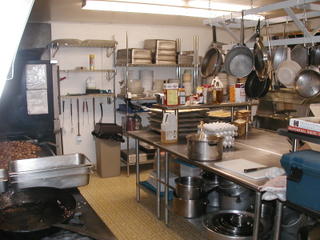
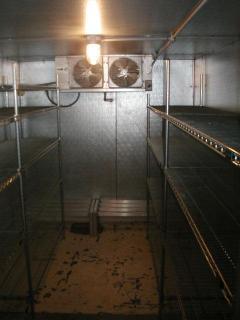
The photographs are of Daybreak Camp kitchen, Felton, California.

Tuesday, June 28, 2005

Second Set of Lessons From a Week-Long Bible Camp, Part 2

The menu is the key document for any food service operation. Restaurants to camp kitchens use the menu to determine staffing needs, food cost and purchase levels. A well-designed menu will meet nutritional needs of the campers and it'll satisfy cultural and ethnic desires.

Purchase More Ready-to-Cook Food

On Monday night of the second year of camp, I sliced my right thumb while forcing 40 pounds of red potatoes though the julienne blades of a mandoline. My hand slipped as I jammed the 10th potato through. After cleaning the mess, I stood in front of the cutting board for the next hour thinking that I could've purchased a ready-to-cook diced potato and saved injury for another occasion.


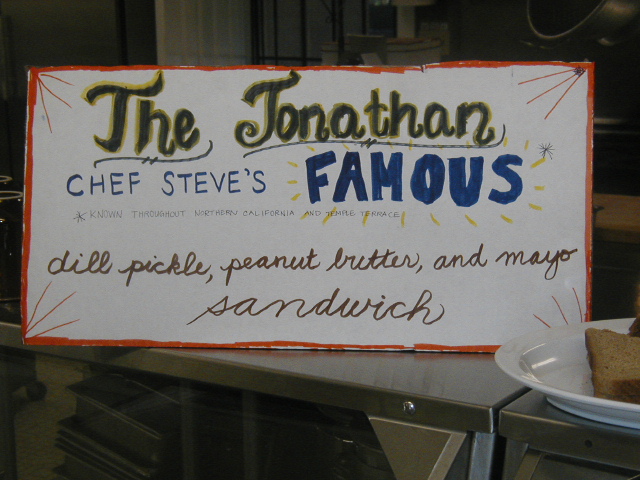
We sometimes offer alternative sandwiches just for fun. One such sandwich is The Jonathan, a peanut butter, mayonnaise and dill pickle sandwich that I've enjoyed since childhood. The sandwich is named after Jonathan, an admissions councilor for Florida College, who ate them by the dozen in the weeks after the 2003 session.

Last year, I started purchasing a few more ready-to-cook products. Any number of products qualify: most baking mixes, bottled barbecue sauce, bottled syrup, par-cooked diced potatoes, frozen corn-on-the-cob, ready-to-bake pizza shells, etc. The key is to balance scratch cooking with the labor- and time-saving features of "convenience" foods. This reduces the workload of the kitchen crew and gives us time to pursue other things, like Bible class.

I use the "Get more bang for your buck" theory of food purchasing. A complete heat-and-serve menu would be cost prohibitive. More than half of our entrees are scratch produced. Most of the scratch-produced meals are relatively easy to cook. The taco meat with all the fixin's (Tuesday lunch), pork roast with stuffing and mashed potatoes (Thursday dinner) and the chicken quesadillas with beans and Mexican rice (Friday lunch) are prime examples.

A few meals are earmarked for special handling: I bake scratch made pizza crusts (Monday dinner) and the homemade cinnamon rolls (Wednesday breakfast) because I enjoy baking these items. Another chef may elect to purchase proof-and-bake products. Skill level of the cooks and the time to produce the pizza or pastry from scratch will be the determining factors.

Keep the Menu Simple

It's true that campers enjoy good food. You should see the number of “I hate camp food” messages on the counselor's message board at ACACamps.org. Those messages sometimes give you the impression that we're suffering as a nation from an epidemic retched camp cooking.


One corner of my "desk"--a stainless steel prep table in the center of the kitchen. I organize all of the recipes by day and meal in a three-ring binder.

Kids enjoy simple fare, especially if the food reminds them of home cooking. The menu doesn't have to be complex in order to be good. You just need to purchase quality vittles and "hire" volunteers who're dedicated to serving in the kitchen.

Each meal served at Northern California FC Camp follows the basic institutional menu pattern:

  • Salad (tossed green plus a few extras)
  • Soup (lunch only)
  • Entree (usually meat-based; we don't have any vegetarians yet)
  • Starch or bread
  • Vegetable (dinner only)
  • Dessert
  • Beverages
The chef and cooks benefit from a simpler menu. It simplifies purchasing, preparation and cooking. And you don't need to spend hours in the kitchen and allows extra time enjoy some of the other activities of camp.

Wednesday, June 22, 2005

Lessons From a Week-Long Children's Bible Camp, Part 7

This is the last of my original 13 (or camper's dozen!) lessons learned. I write these lessons in the weeks after finishing our first camp session in July 2002. I start posting my next set of lessons learned this weekend. These lessons are from our 2003 session.

In General, It's Best To Under Purchase Food For The Week

Not knowing how the campers will react to the menu is one of the great mysteries of camp cooking. Resist the urge to purchase full portions of each menu item for the week. This especially holds true for salads, vegetables and fresh fruit.

Where possible, be prepared to make shopping runs to Costco, Smart and Final or the local market for last-minute items and things that you've run out of. If you can't go, send your camp quartermaster. But be ready to explain your shopping list in detail. On one such list I had heavy cream (you know it as whipping cream). The twenty-something shopper returned with a half-gallon non-dairy coffee creamer, which we never used.

Herbs Are The Spice Of Life

But they're a big waste of the camper's fee if you purchase new bottles of a dozen herbs and spices for the week. Why purchase two ounces of nutmeg when you only need two teaspoons all week? So I invaded my co-director's kitchen--primarily because I forgot in raid my own kitchen, which was 150 miles from camp--and got a hold of about 90 percent of the herbs and spices for the week. We purchased small quantities of the rest.

Tuesday, April 19, 2005

Food Services for 2005 Northern California Florida College Camp

I'm not sure if I've mentioned this yet. I'm the chef for a children's Bible camp for one week each summer in the Santa Cruz, California area. We operate the camp for children who come from churches in Northern California. As the name implies, the camp is sponsored by Florida College, located in Temple Terrace, Florida.

This year camp will meet during the last week of July for six nights and seven days. We run the camp from a Sunday to Saturday. Many staff (with camper children in tow) arrive on Saturday to participate in training. We have a busy week from the moment the Sysco Foodservice truck arrives in Saturday to the minute we ring the last mop on the next Saturday.

Over the coming two months, I'll post information about the food service program at the Northern California FC camp. This information should be helpful to anyone who's tasked with feeding around 150 children and adult staff members in a camp setting.

During our conversations, I will talk about:
  • The menu--The menu is the foundation of any food service operation. With it, the chef outlines each meal and plans production for his facility. The menu requires careful attention when working with volunteer cooks.
  • Children's likes and dislikes--You have to remember that you're feeding children from varied backgrounds. Not all children have a chef-father who makes them eat strange foods.
  • Purchasing--Purchasing can be challenging because you only operate for one week. I' was able to secure the services of Sysco Foodservices of San Francisco in the first year.
  • Production planning--Staff, menu and planning go together.
  • Using volunteer staff--Few camps can hire professional cooks. I've been able to draw on a great group of dedicated volunteers. This includes one husband-wife team. We had a mother-grown daughter team until last year (the daughter has since moved out of the area--the mother is returning for year-four!).
  • Food safety and training--Long-distance training is a must. I depend on the National Restaurant Associations ServSafe material for correspondence training. We also conduct on-site training on Saturday.
  • Working with program staff--Remember, you're here to support the overall program. It doesn't work the other way. We have two very good co-directors to work with.
  • Coordinating with the host facility--Few organization are blessed with their own facilities. We rent Daybreak Camp in Felton, California for the week.
  • Lessons learned from prior years (2002, 2003, 2004)--I wrote "lessons learned" following my experiences in the US Navy Seabees after the 2002 and 2003 camps. I'll share this information as it becomes appropriate to our discussion.
I'd love to hear from others who've experience the joy of feeding children in a summer camp setting.