
 |
| D'ARTA PLAGE, DJ - U.S. Marine Corps Sgt. Mario V. Castillo, right, a food service specialist with the 11th Marine Expeditionary Unit (MEU), and native of Escondido, California, grills hamburgers for the 239th birthday of the United States Marine Corps during sustainment training in D'Arta Plage, Djibouti, Nov. 10, 2014. The 11th MEU is deployed as a theater reserve and crisis response force throughout U.S. Central Command and 5th Fleet area of responsibility. U.S. Marine Corps photo by Cpl. Jonathan Waldman. |
Showing posts with label US Marine Corps. Show all posts
Showing posts with label US Marine Corps. Show all posts
Wednesday, November 11, 2015
Veteran's Day tribute: Marine Corps


Tuesday, November 11, 2014
Veteran's Day tribute: Marine Corps
 |
MARINE CORPS AIR STATION MIRAMAR, Calif. (Aug 26, 2014) - - Lance Cpl. Timothy McKnight, a food service technician at Gonzales Hall, adds peppers to potatoes for the breakfast line before an inspection for the Best of the West competition aboard Marine Corps Air Station Miramar, Calif., Aug. 26. The air station’s mess hall competed in and won the competition in fiscal years 2012, 2013, 2014, and hopes to regain the title for 2015. Photo by Cpl. Christopher Johns.
|
Tuesday, November 22, 2011
Birthday cake
It's only fitting that a ship designed to carry Marines celebrates their birthday.
 GULF OF ADEN (Nov. 8, 2011) -- Chief Culinary Specialist Jason Teasley and Culinary Specialist 1st Class Michael Mahan decorate a cake for the Marine Corps birthday celebration aboard the amphibious dock landing ship USS Whidbey Island (LSD 41). Whidbey Island is deployed as part of the Bataan Amphibious Ready Group, supporting maritime security operations and theater security cooperation efforts is the U.S. 5th Fleet area of responsibility.
U.S. Navy photo by Mass Communication Specialist 3rd Class James Turner.
 GULF OF ADEN (Nov. 8, 2011) -- Chief Culinary Specialist Jason Teasley and Culinary Specialist 1st Class Michael Mahan decorate a cake for the Marine Corps birthday celebration aboard the amphibious dock landing ship USS Whidbey Island (LSD 41). Whidbey Island is deployed as part of the Bataan Amphibious Ready Group, supporting maritime security operations and theater security cooperation efforts is the U.S. 5th Fleet area of responsibility.
U.S. Navy photo by Mass Communication Specialist 3rd Class James Turner.
Friday, November 11, 2011
Veterans Day tribute -- U.S. Marine Corps
As part of my annual Veterans Day tribute, I'm featuring a photograph of a cook from each of the services. We owe a lot to these men and women, many who have sacrificed a big part of their lives to serve this great county. A hearty thank you from 'Round the Chuckbox.
 Corporal Brian Bieber, food service specialist, 2nd Tank Battalion, 2nd Marine Division, gives a smile as he hands a box of food over to a Marine from Company D during a battalion field exercise. The food, prepared by food service Marines, will be a part of the battalion’s evening chow after a day of tank and infantry integration training.
U.S. Marine Corps photograph by Pfc. James Frazer.
 Corporal Brian Bieber, food service specialist, 2nd Tank Battalion, 2nd Marine Division, gives a smile as he hands a box of food over to a Marine from Company D during a battalion field exercise. The food, prepared by food service Marines, will be a part of the battalion’s evening chow after a day of tank and infantry integration training.
U.S. Marine Corps photograph by Pfc. James Frazer.
Friday, February 25, 2011
Cooking in frozen Korea without a can opener, part 2
Continued from Wednesday. Phil Street, a US Marine cook during the Korean Way, served with the First Marine Division in Korea in 1952 and 1953.
Life in camp: frozen water supply, black coffee and blackout conditions
When we received water in the water buffalos (portable water trailers) that were frozen solid. It became a 250-gallon giant ice cube. We had to climb on top and take a big steel bar to break the ice into chunks so we could melt it to make coffee and cook for the Marines.
The coffee was black. So was the camp as we were close enough to the front lines. No lights could show after dark. We had an enemy plane that we called Bed Check Charlie who would fly over us on cloudy nights and drop out hand grenades.
We always had coffee and something to eat if they wanted it.
We had one cook who for a reason known only to him wanted the truck drivers to get his permission for a cup of coffee. The coffee was made in a 32-gallon GI can. The water was first brought to a boil, then the coffee grounds were dumped in and allowed to settle to the bottom.
We kept a fire under the GI can. The coffee could almost walk on its own as it was so strong.
The cook who wanted permission from the Marine who ran the generator as only the mess tent had lights at night and it was blacked out. The cook had just bought a short wave AM brand all leather bound radio from the PX truck which cost that cost way over $100. The PX truck came around about once per month.
The cook chewed out the Marine because he did not ask first ask permission for a canteen cup of coffee. The Marine went back to the generators, ran it up to 300 volts and blew up the cook's radio. The radio caught fire and never worked again.
The Marine came running over to the mess tent and said that something went wrong and the generator shot up 300 volts. He brought us new light bulbs as the serge burned them all out. He told me later that he did it on purpose as that would teach the cook to not want him to have coffee.
I never did tell the cook what happened to his radio to burn up as he deserved it.
Life in camp: frozen water supply, black coffee and blackout conditions
When we received water in the water buffalos (portable water trailers) that were frozen solid. It became a 250-gallon giant ice cube. We had to climb on top and take a big steel bar to break the ice into chunks so we could melt it to make coffee and cook for the Marines.
The coffee was black. So was the camp as we were close enough to the front lines. No lights could show after dark. We had an enemy plane that we called Bed Check Charlie who would fly over us on cloudy nights and drop out hand grenades.
We always had coffee and something to eat if they wanted it.
We had one cook who for a reason known only to him wanted the truck drivers to get his permission for a cup of coffee. The coffee was made in a 32-gallon GI can. The water was first brought to a boil, then the coffee grounds were dumped in and allowed to settle to the bottom.
We kept a fire under the GI can. The coffee could almost walk on its own as it was so strong.
The cook who wanted permission from the Marine who ran the generator as only the mess tent had lights at night and it was blacked out. The cook had just bought a short wave AM brand all leather bound radio from the PX truck which cost that cost way over $100. The PX truck came around about once per month.
The cook chewed out the Marine because he did not ask first ask permission for a canteen cup of coffee. The Marine went back to the generators, ran it up to 300 volts and blew up the cook's radio. The radio caught fire and never worked again.
The Marine came running over to the mess tent and said that something went wrong and the generator shot up 300 volts. He brought us new light bulbs as the serge burned them all out. He told me later that he did it on purpose as that would teach the cook to not want him to have coffee.
I never did tell the cook what happened to his radio to burn up as he deserved it.
Wednesday, February 23, 2011
Cooking in frozen Korea without a can opener
Phil Street, a US Marine Corps sergeant in the Korean War, recently shared his story with me. Phil served as a cook in the Corps from 1951 to 1954. The photograph shows Phil during warmer months in Korea.
Click to view a series of pictures of a M-1937 field range in action. Even though the blog hasn't been updated since July 2009, it gives you an accurate picture of how the stove was deployed in the Army and Marines.
 I arrived in Korea in February 1952, where I was assigned to the 7th Motor Transport Battalion. On my first day there I noticed we had no can opener. We fed 850 Marines at each meal since we had a company of amphibious DUKWs TAD from the Second Marine Division assigned to the First Marine Division.
We also rode shotgun on the trucks and loaded large dump trucks with sand, using entrenching tools that were made to dig foxholes. Maybe we could have used those entrenching tools to open cans of food.
Much of our food came in 16-ounce cans, and we had to use a meat cleaver to open them. Bacon came in 16-ounce cans also. We had to cut both ends out and then split them down the sides so we could try and get the bacon out of them. Many of us had a lot of bad cuts from trying to get the bacon out of those small cans.
When I left at the end of my tour 13 months later we still had no can opener.
Everything froze
Most of out 2-1/2-ton trucks in Korea never even had doors on them. In subzero weather, the trucks had to be started every 30 minutes to make sure they would start when needed 24 hours per day. Then several did not want to start so the drivers would pull them with a chain trying to get them to start.
Our canteens would freeze and burst on our sides of they were filled more than half full.
The Navy corpsmen put small glass vials of morphine in their mouths to keep them from freezing so to give shots to the wounded. Blood plasma would freeze before they could get all of it into the wounded who needed the blood.
Lighting field stoves in freezing weather
 Then there were the ranges. Our M-1937 cook ranges had to have 40 pounds of air pressure pumped into them to get them to burn properly. But, we did not have an air compressor, so we used a bicycle pump, which took forever. The cold affected out cook ranges as it did everything else.
The cook ranges had a generator (piece of pipe) running down the center that had to reach a certain temperature before they would burn properly with a blue flame. Otherwise, the flame was yellow and would flood. The gas would run out on your feet and catch your shoes on fire.
This happened many times. I think that was how the dance The Twist was started and you danced trying to get the fire out. Sometimes the gas lines would spring a leak and shoot flame out line a flame small thrower. You hoped the fire was not towards you.
With temperatures as low as 40 below zero, the leather seal inside the bicycle pumps froze and when it was zero weather the leather was so stiff it could take 20 minutes or more, taking turns pumping to get the 40 pounds of air in one range.
We had many ranges to pump up, so it took forever to get ready to light the burners. To make matters worse, when it was below zero the generator was too cold to generate. So we used a blow torch to heat the generator. But it was often so cold the blow torch would not generate either.
So we had to burn gasoline in the little cup below the blow torch nozzle in order to thaw the torch. Many times it was still to cold for the blow torch to generate so you had to keep repeating the process until the torch thawed out enough to work properly.
We had one cook badly burned trying this as he took a funnel with gas in it with his finger over the end and just dripped the gas into the cup a little at a time. When he repeated this the second time the cup on the blow torch was too hot and ignited as soon as the gas hit it. He threw the funnel in the air and the gasoline came down on his arm and set his clothes on fire.
To be continued ...
Click to view a series of pictures of a M-1937 field range in action. Even though the blog hasn't been updated since July 2009, it gives you an accurate picture of how the stove was deployed in the Army and Marines.
 I arrived in Korea in February 1952, where I was assigned to the 7th Motor Transport Battalion. On my first day there I noticed we had no can opener. We fed 850 Marines at each meal since we had a company of amphibious DUKWs TAD from the Second Marine Division assigned to the First Marine Division.
We also rode shotgun on the trucks and loaded large dump trucks with sand, using entrenching tools that were made to dig foxholes. Maybe we could have used those entrenching tools to open cans of food.
Much of our food came in 16-ounce cans, and we had to use a meat cleaver to open them. Bacon came in 16-ounce cans also. We had to cut both ends out and then split them down the sides so we could try and get the bacon out of them. Many of us had a lot of bad cuts from trying to get the bacon out of those small cans.
When I left at the end of my tour 13 months later we still had no can opener.
Everything froze
Most of out 2-1/2-ton trucks in Korea never even had doors on them. In subzero weather, the trucks had to be started every 30 minutes to make sure they would start when needed 24 hours per day. Then several did not want to start so the drivers would pull them with a chain trying to get them to start.
Our canteens would freeze and burst on our sides of they were filled more than half full.
The Navy corpsmen put small glass vials of morphine in their mouths to keep them from freezing so to give shots to the wounded. Blood plasma would freeze before they could get all of it into the wounded who needed the blood.
Lighting field stoves in freezing weather
 Then there were the ranges. Our M-1937 cook ranges had to have 40 pounds of air pressure pumped into them to get them to burn properly. But, we did not have an air compressor, so we used a bicycle pump, which took forever. The cold affected out cook ranges as it did everything else.
The cook ranges had a generator (piece of pipe) running down the center that had to reach a certain temperature before they would burn properly with a blue flame. Otherwise, the flame was yellow and would flood. The gas would run out on your feet and catch your shoes on fire.
This happened many times. I think that was how the dance The Twist was started and you danced trying to get the fire out. Sometimes the gas lines would spring a leak and shoot flame out line a flame small thrower. You hoped the fire was not towards you.
With temperatures as low as 40 below zero, the leather seal inside the bicycle pumps froze and when it was zero weather the leather was so stiff it could take 20 minutes or more, taking turns pumping to get the 40 pounds of air in one range.
We had many ranges to pump up, so it took forever to get ready to light the burners. To make matters worse, when it was below zero the generator was too cold to generate. So we used a blow torch to heat the generator. But it was often so cold the blow torch would not generate either.
So we had to burn gasoline in the little cup below the blow torch nozzle in order to thaw the torch. Many times it was still to cold for the blow torch to generate so you had to keep repeating the process until the torch thawed out enough to work properly.
We had one cook badly burned trying this as he took a funnel with gas in it with his finger over the end and just dripped the gas into the cup a little at a time. When he repeated this the second time the cup on the blow torch was too hot and ignited as soon as the gas hit it. He threw the funnel in the air and the gasoline came down on his arm and set his clothes on fire.
To be continued ...
Monday, February 21, 2011
Preview of coming articles and recipes
I currently working on several articles and recipes for 'Round the Chuckbox. They include:
- Article on cooking in the Korea War by US Marine Sergeant Phil Street
- Final article in "My salsa journey" series; click for the first and second installments
- Recipe for Salsa Verde; although I haven't posted a recipe for the ubiquitous green pepper sauce, you can click for a Chili Verde recipe
- Recipe for Salsa Ranchera; click for my most recent salsa recipe, Salsa Americana
- Follow-up article to the Roasted Red Pepper Vinaigrette recipe
Wednesday, June 30, 2010
Chiefs and senior enlisted Marines serve pizza New Orleans style
By Senior Chief Mass Communication Specialist Robert Winkler, Southern Partnership Station Public Affairs
 USS NEW ORLEANS, At Sea (NNS) -- Chief petty officers and senior enlisted Marines aboard USS New Orleans (LPD 18) switched roles with food service attendants June 25, and worked in the galley to create, cook and serve pizzas to the crew.
The crew had the chance to choose their own toppings with the ingredients on hand. Chiefs and senior Marines dished out slices on the serving line, cleaned tables and washed dishes.
"The ship's been doing this long before I got here," said New Orleans Command Master Chief Jeff Kozlik. "The crew loves it. It may seem like a small thing to serve one meal, but it gives us a chance to spend more time with the crew. They love seeing us back here sweating and doing the kind of work they do on a daily basis," he said.
Sailors and Marines who normally work for senior enlisted personnel in some capacity found themselves in charge.
"The roles are completely flip-flopped," said Kozlik. "There are still a couple of FSAs who help us out, but they're in a supervisory role and telling us what to do. I've had a couple of Sailors back here teaching me how to work at the deep sink, and how to keep from hurting myself."
Engineman Fireman Eric Shaw, of Stayton, Ore., normally works in main propulsion but has been taking his turn as an FSA for the past two-and-a-half months.
 "I think mess duty is important," said Shaw. "When I joined the Navy, I thought I would be spending all my time working on engines, but I was sent to work in the galley shortly after I came aboard. We have to help out [the culinary specialists] with maintaining cleanliness, otherwise, who will?"
Shaw enjoyed the change of pace and appreciated the assistance.
"It made my job a lot easier," said Shaw. "It's kind of funny that an E-3 is telling chiefs what to do. It's cool working with the chiefs. Even thought they wear that anchor, they can still be fun to work with. I went from doing all the dirty work to being a supervisor today and that was cool."
Chief Electronics Technician Daniel Kast, electronics maintenance officer for Amphibious Squadron 5, cooked the pizzas.
"I think it was a good time," said Kast. "It gave us a chance to see the crew. Most of the time they're serving us and this gave us a chance to give back and serve them. We had fun with it. I can tell it brings morale up. I think they love to see us back there working. It also gives the chiefs a chance to get together and spend some time together as a mess."
New Orleans, along with Amphibious Squadron 5; 4th Platoon, Company C, 3rd Assault Amphibian Battalion, 1st Marine Division; and other embarked units are participating in Southern Partnership Station.
SPS is a deployment of various specialty platforms to the U.S. Southern Command Area of Responsibility in Latin America and the Caribbean. The mission's primary goal is information sharing with navies, coast guards, and civilian services throughout the region. SPS provides the opportunity for joint operations between partner nations, which develops and tests participating regional civil and maritime services' capabilities to respond to a wide variety of maritime missions while keeping open vital lines of communication between regional services.
Top photo: Chief Fire Controlman Guadalupe Galindo carries a sheet pan of pizzas to the ovens as the Navy and Marine Corps senior enlisted aboard the amphibious transport dock ship USS New Orleans (LPD 18) take over galley duties for dinner.
Bottom photo: Chief Fire Controlman Guadalupe Galindo and Chief Hull Technician David Moser make pizza as the Navy and Marine Corps senior enlisted aboard the amphibious transport dock ship USS New Orleans (LPD 18) take over galley duties for dinner.
 USS NEW ORLEANS, At Sea (NNS) -- Chief petty officers and senior enlisted Marines aboard USS New Orleans (LPD 18) switched roles with food service attendants June 25, and worked in the galley to create, cook and serve pizzas to the crew.
 The crew had the chance to choose their own toppings with the ingredients on hand. Chiefs and senior Marines dished out slices on the serving line, cleaned tables and washed dishes.
"The ship's been doing this long before I got here," said New Orleans Command Master Chief Jeff Kozlik. "The crew loves it. It may seem like a small thing to serve one meal, but it gives us a chance to spend more time with the crew. They love seeing us back here sweating and doing the kind of work they do on a daily basis," he said.
Sailors and Marines who normally work for senior enlisted personnel in some capacity found themselves in charge.
"The roles are completely flip-flopped," said Kozlik. "There are still a couple of FSAs who help us out, but they're in a supervisory role and telling us what to do. I've had a couple of Sailors back here teaching me how to work at the deep sink, and how to keep from hurting myself."
Engineman Fireman Eric Shaw, of Stayton, Ore., normally works in main propulsion but has been taking his turn as an FSA for the past two-and-a-half months.
 "I think mess duty is important," said Shaw. "When I joined the Navy, I thought I would be spending all my time working on engines, but I was sent to work in the galley shortly after I came aboard. We have to help out [the culinary specialists] with maintaining cleanliness, otherwise, who will?"
 Shaw enjoyed the change of pace and appreciated the assistance.
"It made my job a lot easier," said Shaw. "It's kind of funny that an E-3 is telling chiefs what to do. It's cool working with the chiefs. Even thought they wear that anchor, they can still be fun to work with. I went from doing all the dirty work to being a supervisor today and that was cool."
Chief Electronics Technician Daniel Kast, electronics maintenance officer for Amphibious Squadron 5, cooked the pizzas.
"I think it was a good time," said Kast. "It gave us a chance to see the crew. Most of the time they're serving us and this gave us a chance to give back and serve them. We had fun with it. I can tell it brings morale up. I think they love to see us back there working. It also gives the chiefs a chance to get together and spend some time together as a mess."
New Orleans, along with Amphibious Squadron 5; 4th Platoon, Company C, 3rd Assault Amphibian Battalion, 1st Marine Division; and other embarked units are participating in Southern Partnership Station.
SPS is a deployment of various specialty platforms to the U.S. Southern Command Area of Responsibility in Latin America and the Caribbean. The mission's primary goal is information sharing with navies, coast guards, and civilian services throughout the region. SPS provides the opportunity for joint operations between partner nations, which develops and tests participating regional civil and maritime services' capabilities to respond to a wide variety of maritime missions while keeping open vital lines of communication between regional services.
Top photo: Chief Fire Controlman Guadalupe Galindo carries a sheet pan of pizzas to the ovens as the Navy and Marine Corps senior enlisted aboard the amphibious transport dock ship USS New Orleans (LPD 18) take over galley duties for dinner.
Bottom photo: Chief Fire Controlman Guadalupe Galindo and Chief Hull Technician David Moser make pizza as the Navy and Marine Corps senior enlisted aboard the amphibious transport dock ship USS New Orleans (LPD 18) take over galley duties for dinner.
Friday, January 01, 2010
U.S. Armed Forces chef's battle in Salt Lake City
I haved spent the morning catching up on YouTube videos. Viewing YouTube with a dial-up Internet connection isn't practical. A decent highspeed Internet connection is hard to come by in the Serria Nevada foothills.
This video was posted to YouTube in April 2008. Chefs from each of the five military services battled in an Iron Chef style competition.
This video was posted to YouTube in April 2008. Chefs from each of the five military services battled in an Iron Chef style competition.
Thursday, November 26, 2009
Thanksgiving in Iraq
Let's not forget our loved ones who're serving the cause of freedom in Iraq and Afghanistan. The first image reminds us that these celebrations occur in a war zone. These Marines and Sailors must remain vigilant during the brief respite from the dangers of the war.
 CAMP BAHARIA, Iraq (Nov. 27, 2008) -- U.S. Navy Command Master Chief Michael R. Ruiz, I Marine Expeditionary Force, stands outside as Secretary of the Navy The Honorable Mr. Donald C. Winter visits Camp Baharia. Winter is visiting bases around Al Anbar, thanking service members for their sacrifice and serving them in a small way on Thanksgiving Day.
 CAMP TAQADDUM, Iraq (Nov. 27, 2008) -- Thanksgiving goodies are displayed as the Secretary of the Navy The Honorable Mr. Donald C. Winter visits U.S. Marines, Sailors and Soldiers at Camp Taqaddum. The Honorable Mr. Winter is visiting bases around Al Anbar, thanking service members for their sacrifice and serving them in a small way on Thanksgiving Day.
 CAMP BAHARIA, Iraq (Nov. 27, 2008) -- Secretary of the Navy The Honorable Mr. Donald C. Winter cuts the Thanksgiving cake at the chow hall at Camp Baharia. Winter is visiting bases around Al Anbar, thanking service members for their sacrifice and serving them in a small way.
 AL ASAD AIRBASE, Iraq (Nov. 27, 2008) -- Secretary of the Navy the Honorable Mr. Donald C. Winter, from Brooklyn, N.Y., serves a U.S. Marine during Thanksgiving dinner at the chow hall onboard Camp Baharia. Winter is visiting bases throughout Al Anbar, thanking service members for their sacrifice and serving them in a small way.
U.S. Marine Corps photos by Lance Cpl. Lindsay L. Sayres.
 CAMP BAHARIA, Iraq (Nov. 27, 2008) -- U.S. Navy Command Master Chief Michael R. Ruiz, I Marine Expeditionary Force, stands outside as Secretary of the Navy The Honorable Mr. Donald C. Winter visits Camp Baharia. Winter is visiting bases around Al Anbar, thanking service members for their sacrifice and serving them in a small way on Thanksgiving Day.
  CAMP TAQADDUM, Iraq (Nov. 27, 2008) -- Thanksgiving goodies are displayed as the Secretary of the Navy The Honorable Mr. Donald C. Winter visits U.S. Marines, Sailors and Soldiers at Camp Taqaddum. The Honorable Mr. Winter is visiting bases around Al Anbar, thanking service members for their sacrifice and serving them in a small way on Thanksgiving Day.
 CAMP BAHARIA, Iraq (Nov. 27, 2008) -- Secretary of the Navy The Honorable Mr. Donald C. Winter cuts the Thanksgiving cake at the chow hall at Camp Baharia. Winter is visiting bases around Al Anbar, thanking service members for their sacrifice and serving them in a small way.
 AL ASAD AIRBASE, Iraq (Nov. 27, 2008) -- Secretary of the Navy the Honorable Mr. Donald C. Winter, from Brooklyn, N.Y., serves a U.S. Marine during Thanksgiving dinner at the chow hall onboard Camp Baharia. Winter is visiting bases throughout Al Anbar, thanking service members for their sacrifice and serving them in a small way.
U.S. Marine Corps photos by Lance Cpl. Lindsay L. Sayres.
Wednesday, November 11, 2009
Receiving honors
As part of my annual Veteran's Day tribute to U.S. Armed Forces, I'm posting photographs of the cooks and bakers in action this year.
 MARINE CORPS AIR GROUND COMBAT CENTER TWENTYNINE PALMS, Calif. (8/12/09) -- Pfc. David A. Mantilla, a food service specialist with Headquarters Company, 7th Marine Regiment is recognized by Maj. Gen. Richard P. Mills, commanding general, 1st Marine Division here Aug. 12, for superior performance during the regiment’s pre-deployment training exercise. Mantilla, 24, is from Washington Heights, N.Y.
U.S. Marine Corps photograph by Cpl. Zachary J. Nola.
 MARINE CORPS AIR GROUND COMBAT CENTER TWENTYNINE PALMS, Calif. (8/12/09) -- Pfc. David A. Mantilla, a food service specialist with Headquarters Company, 7th Marine Regiment is recognized by Maj. Gen. Richard P. Mills, commanding general, 1st Marine Division here Aug. 12, for superior performance during the regiment’s pre-deployment training exercise. Mantilla, 24, is from Washington Heights, N.Y.
U.S. Marine Corps photograph by Cpl. Zachary J. Nola.
Tuesday, July 07, 2009
Sailors and Marines join efforts in the mess to support BHR crew
By Mass Communication Specialist 3rd Class Eva-Marie Ramsaran
PACIFIC OCEAN (NNS) (7/4/2009) -- Navy and Marine Corps personnel aboard USS Bonhomme Richard (LHD 6) combined efforts cooking and serving more than 2,400 meals, June 29, while operating at sea off the coast of Southern California.
Bonhomme Richard, the flagship for the Bonhomme Richard Amphibious Ready Group is at sea conducting its initial integration exercise with the 11th Marine Expeditionary Unit. Quick integration of the culinary specialists, Marine cooks, food service attendants, and messmen was crucial to a crew of nearly 3,000 hungry personnel.
"It's an organized chaos," said Culinary Specialist 1st Class Nino Villamor. "The first day of being underway is always a trial and error on how much food to prepare because we don't know how many people are going to eat or be in line."
The crew members and embarked Marines didn't disappoint. Crowds, noise and long chow lines were the norm, keeping the cooks and mess personnel busier than imaginable.
But such scenes will be the norm as the ARG/MEU team participates in three consecutive training evolutions prior to the start of a regularly scheduled deployment later this year.
"It's important to integrate with the ship and crew to learn your way around, get to know people and keep a positive attitude doing this type of work," said Cpl. Joseph Cahoon of the 11th MEU.
"With the planning, the food preparation and the execution of each meal, it is almost impossible to do it all in two hours," said Villamor. "But my guys in the kitchen work efficiently and they add their personal touch and flavors to each meal."
In order to meet mess deck requirements, each FSA and messman must participate in sanitation training, cleaning procedures, and food preparation procedures while underway. During training, both Marines and Sailors bring their unique skills and techniques to the kitchen; therefore the mess operates smoothly and in a timely manner.
Cahoon says, "By working in the mess decks with Navy Sailors, it takes a while to adjust to the new environment of being on the ship but I look to them for advice and I expect to learn from them."
By having the cooks in the kitchen, they give insight as to what kind of meals their fellow Marines would prefer. There are 20 cooks in the galley and 40 messmen and FSAs that take part in servicing the Bonhomme Richard's crew with not just hot meals but with great customer service.
"I take it as an opportunity to always serve and put on a good show because our rate is all about customer service and supporting the overall mission of the Navy," said Villamor.
PACIFIC OCEAN (NNS) (7/4/2009) -- Navy and Marine Corps personnel aboard USS Bonhomme Richard (LHD 6) combined efforts cooking and serving more than 2,400 meals, June 29, while operating at sea off the coast of Southern California.
Bonhomme Richard, the flagship for the Bonhomme Richard Amphibious Ready Group is at sea conducting its initial integration exercise with the 11th Marine Expeditionary Unit. Quick integration of the culinary specialists, Marine cooks, food service attendants, and messmen was crucial to a crew of nearly 3,000 hungry personnel.
"It's an organized chaos," said Culinary Specialist 1st Class Nino Villamor. "The first day of being underway is always a trial and error on how much food to prepare because we don't know how many people are going to eat or be in line."
The crew members and embarked Marines didn't disappoint. Crowds, noise and long chow lines were the norm, keeping the cooks and mess personnel busier than imaginable.
But such scenes will be the norm as the ARG/MEU team participates in three consecutive training evolutions prior to the start of a regularly scheduled deployment later this year.
"It's important to integrate with the ship and crew to learn your way around, get to know people and keep a positive attitude doing this type of work," said Cpl. Joseph Cahoon of the 11th MEU.
"With the planning, the food preparation and the execution of each meal, it is almost impossible to do it all in two hours," said Villamor. "But my guys in the kitchen work efficiently and they add their personal touch and flavors to each meal."
In order to meet mess deck requirements, each FSA and messman must participate in sanitation training, cleaning procedures, and food preparation procedures while underway. During training, both Marines and Sailors bring their unique skills and techniques to the kitchen; therefore the mess operates smoothly and in a timely manner.
Cahoon says, "By working in the mess decks with Navy Sailors, it takes a while to adjust to the new environment of being on the ship but I look to them for advice and I expect to learn from them."
By having the cooks in the kitchen, they give insight as to what kind of meals their fellow Marines would prefer. There are 20 cooks in the galley and 40 messmen and FSAs that take part in servicing the Bonhomme Richard's crew with not just hot meals but with great customer service.
"I take it as an opportunity to always serve and put on a good show because our rate is all about customer service and supporting the overall mission of the Navy," said Villamor.
Monday, March 23, 2009
Marine Corps Air Station Yuma cooks take top culinary team
U.S. Marine Corps photographs by Pfc. Jerrick J. Griffin.
The U.S. Marine Corps Culinary Team of the Quarter Competition had a Mardi Gras celebration theme and each team had to prepare a full-course meal while maintaining that theme. The winners were awarded embroidered chef's coats, gold medals a plaque and a two-week trip to the Culinary Institute of America in New York. Marine Corps Air Station Yuma's team came in first place and the team from Marine Corps Air Ground Combat Center Twentynine Palms came in second. Camp Pendleton, California hosted the competition.
 Tamara Zoria, 40, Vista, Calif., and Andrew Rude, 29, Fallbrook, Calif., food service cooks for Sodexo inspects the ingredients for the competition.
 Cpl. Jacob R. Ballard, 21, Coventry, Rhode Island, a food service specialist from Marine Corps Air Station Yuma, chops tomatoes at the competition.
 Pfc. Ja’Lisa C. White, 19, Dallas, a food service specialist from Marine Corps Air Station Yuma, watches as she cooks her Jammin’Jambalaya for the competition.
 Pfc. Ja’Lisa C. White, 19, Dallas, a food service specialist from Marine Corps Air Station Yuma, prepares the chicken for her Jammin Jambalaya at the competition.
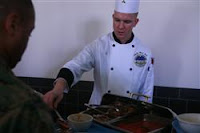 Cpl. Austin J. Nelson, 21, Midland, Michigan, a food service specialist from Marine Corps Air Ground Combat Center Twentynine Palms, serves food at the competition.
 Cpl. Jacob R. Ballard, 21, Coventry, Rhode Island, a food service specialist with Marine Corps Air Station Yuma watches as people served themselves at the competition.
The U.S. Marine Corps Culinary Team of the Quarter Competition had a Mardi Gras celebration theme and each team had to prepare a full-course meal while maintaining that theme. The winners were awarded embroidered chef's coats, gold medals a plaque and a two-week trip to the Culinary Institute of America in New York. Marine Corps Air Station Yuma's team came in first place and the team from Marine Corps Air Ground Combat Center Twentynine Palms came in second. Camp Pendleton, California hosted the competition.
 Tamara Zoria, 40, Vista, Calif., and Andrew Rude, 29, Fallbrook, Calif., food service cooks for Sodexo inspects the ingredients for the competition.
  Cpl. Jacob R. Ballard, 21, Coventry, Rhode Island, a food service specialist from Marine Corps Air Station Yuma, chops tomatoes at the competition.
  Pfc. Ja’Lisa C. White, 19, Dallas, a food service specialist from Marine Corps Air Station Yuma, watches as she cooks her Jammin’Jambalaya for the competition.
  Pfc. Ja’Lisa C. White, 19, Dallas, a food service specialist from Marine Corps Air Station Yuma, prepares the chicken for her Jammin Jambalaya at the competition.
  Cpl. Austin J. Nelson, 21, Midland, Michigan, a food service specialist from Marine Corps Air Ground Combat Center Twentynine Palms, serves food at the competition.
  Cpl. Jacob R. Ballard, 21, Coventry, Rhode Island, a food service specialist with Marine Corps Air Station Yuma watches as people served themselves at the competition.
Tuesday, November 11, 2008
Cannon cook
These photographs serve as a Veteran's Day tribute to the hard-working cooks and bakers of the U.S. Marine Corps ...
 AL-ANBAR PROVINCE, IRAQ (August 23, 2008) -- Lance Cpl. Terry A. Mastin, a food service specialist with Mike Battery, 3rd Battalion, 14th Marine Regiment, 2nd Light Armored Reconnaissance Battalion, Regimental Combat Team 5, pulls the lanyard to fire the M-777 Howitzer while Cpl. Andrew C. Ollenberger, a cannoneer with Mike Battery, looks on during an illumination shoot at Patrol Base El Dorado, Iraq, Aug. 23, 2008.
The unit has been able to fire their howitzers more than 20 times this deployment to provide illumination during night operations. Mike Battery is a reserve artillery battery based out of Chattanooga, Tenn., and attached to 2nd LAR Bn.
U.S. Marine Corps photograph by Cpl. Ryan Tomlinson of Regimental Combat Team 5.
 AL-ANBAR PROVINCE, IRAQ (August 23, 2008) -- Lance Cpl. Terry A. Mastin, a food service specialist with Mike Battery, 3rd Battalion, 14th Marine Regiment, 2nd Light Armored Reconnaissance Battalion, Regimental Combat Team 5, pulls the lanyard to fire the M-777 Howitzer while Cpl. Andrew C. Ollenberger, a cannoneer with Mike Battery, looks on during an illumination shoot at Patrol Base El Dorado, Iraq, Aug. 23, 2008.
 The unit has been able to fire their howitzers more than 20 times this deployment to provide illumination during night operations. Mike Battery is a reserve artillery battery based out of Chattanooga, Tenn., and attached to 2nd LAR Bn.
U.S. Marine Corps photograph by Cpl. Ryan Tomlinson of Regimental Combat Team 5.
Thursday, June 19, 2008
15TH MEU 'mess men' run a clean operation aboard USS Peleliu
By Lance Cpl. Tim Parish, 15th Marine Expeditionary Unit Public Affairs
USS PELELIU, At Sea (NNS) (6/16/2008) -- The mess decks aboard the USS Peleliu (LHA 5), open 24- hours a day, serve four meals a day without fail.
The Marines and Sailors of the 15th Marine Expeditionary Unit, dependant on the services in the mess decks, often overlook their fellow shipmates who enable the smooth flow of traffic through the chow lines on a continuous basis.
'Mess Duty,' infamous for long hours and thankless in its responsibility, is known to most junior Marines and Sailors as a 30-day lesson on the laborious side of ship life.
The up-side, according to Staff Sgt. Javier Hernandez, the mess chief for Battalion Landing Team, 2nd Battalion, 5th Marine Regiment, 15th MEU, is having a direct impact on the welfare of the Marines and Sailors aboard Peleliu by preparing and serving hearty, nutritious meals to fuel the continuous operations aboard ship.
"[Mess duty is] not just about cleaning pots and pans," said Hernandez. "A lot of it is to maintain a very high standard of hygiene and sanitation.
"An aircraft doesn't always have to fly, a Marine doesn't always have to go onto land to complete a mission and vehicles don't always have to roll out, but every single person on this ship will always eat. This mess deck will not shut down for any reason."
Hernandez explained that in addition to providing sustenance, four squares a day with cold drinks and desserts, the Marines and Sailors serving on the mess decks of the Peleliu strive to create a welcome atmosphere and morale raising spirit.
"We want everyone to be here together, I think it's good for morale," said Hernandez. "Food service is a morale booster on ship."
"You know that one Marine who is working a long shift day, and he say's you know what 'I want to eat something that's hot, something that's going to give me nourishment,' and it might be that day with an ice cream social. They come in and say 'Wow, that's exactly what I wanted'," continued Hernandez, a native of Brooklyn, N.Y.
The combined mess decks, one for enlisted Marines and Sailors E-6 and below, another for enlisted Marines and Sailors E-7 and above, one for officers and one for senior officers, prepare and serve about 2,400 trays per meal every day.
On average, the Marines and Sailors of Peleliu consume over 1,000 pounds of meat or poultry during every meal and almost a ton of fruit and vegetables a day, according to Culinary Specialist 1st Class (SW) Martin M. Malana.
"On this mess deck alone we serve at least 1,200 pounds of chicken for one meal," said Malana. "As far as beef, we break out, for one meal, at least 1,000 pounds, and for turkey we break out at 1,100 to 1,200 pounds.
"For potatoes we use approximately 400-500 pounds a day. For fruits we usually break out a pallet to a pallet and a half a day, or about 1,800 pounds put together. We're putting it out 24-hours a day while underway."
Malana also noted the quantities of food aside, the importance of a reliable food-service section aboard Peleliu is the hand-in-hand partnership between Marines and Sailors who serve daily on the mess deck.
"In regards to the Sailors and the Marines, they're working as a team. They begin to appreciate people who they are not really exposed to, how they deal with their superiors."
"Blending in both the Marines and the Navy, it gives them the opportunity, on both sides, to see each others work ethics. It's a matter of coordination."
Mess duty, generally assigned to junior Marines of all the major subordinate elements of the 15th MEU, lasts for 30 12-hour days. The work does not stop when the sun goes down, however, as a second crew of mess men work through the night in preparation for the following day.
Some duties of the night workers include cleaning and stocking as well as preparation of foods for the day crew, according to Cpl. Lazaro Hernandez, food service specialist, BLT 2/5, a night crew cook aboard Peleliu.
The work at night helps facilitate the smooth operations during the first meal of the day and less work for the day crew in preparation of daytime meals swamped by the majority of those aboard.
"Usually we help them [the day crew] with whatever they have to do during the day," said Hernandez. "I, as a baker, help them with whatever they are going to serve for lunch or dinner.
"Every night we make bread, pastries and cakes - about five or six thousand portions."
The night crew also takes care of the night workers of different sections throughout the ship with mid-rats, the first meal of the day for night owls, explained Hernandez.
Collateral duties involved in the success of the mess decks include the bake-shop, where the ship's bread and desserts are created from scratch, and the scullery where Marines and Sailors wash and sanitize trays and utensils for use on the mess-decks.
"Mess men help out the cooks by cleaning and helping with the food," said Hernandez. "It's a lot of work. There are about 2,000 people on ship, maybe more."
"We don't have enough cooks. We have a lot of food going in and out and we have to move food around and we can't do that by ourselves, we have to have help."
The Camp Pendleton, Calif.-based 15th MEU is comprised of approximately 2,200 Marines and Sailors and is a forward deployed force of readiness capable of conducting numerous operations, such as non-combatant evacuation operations, humanitarian assistance operations and a wide range of amphibious missions.
The 15th MEU is currently deployed aboard Peleliu, USS Dubuque (LPD 8) and USS Pearl Harbor (LSD 52).
USS PELELIU, At Sea (NNS) (6/16/2008) -- The mess decks aboard the USS Peleliu (LHA 5), open 24- hours a day, serve four meals a day without fail.
The Marines and Sailors of the 15th Marine Expeditionary Unit, dependant on the services in the mess decks, often overlook their fellow shipmates who enable the smooth flow of traffic through the chow lines on a continuous basis.
'Mess Duty,' infamous for long hours and thankless in its responsibility, is known to most junior Marines and Sailors as a 30-day lesson on the laborious side of ship life.
The up-side, according to Staff Sgt. Javier Hernandez, the mess chief for Battalion Landing Team, 2nd Battalion, 5th Marine Regiment, 15th MEU, is having a direct impact on the welfare of the Marines and Sailors aboard Peleliu by preparing and serving hearty, nutritious meals to fuel the continuous operations aboard ship.
"[Mess duty is] not just about cleaning pots and pans," said Hernandez. "A lot of it is to maintain a very high standard of hygiene and sanitation.
"An aircraft doesn't always have to fly, a Marine doesn't always have to go onto land to complete a mission and vehicles don't always have to roll out, but every single person on this ship will always eat. This mess deck will not shut down for any reason."
Hernandez explained that in addition to providing sustenance, four squares a day with cold drinks and desserts, the Marines and Sailors serving on the mess decks of the Peleliu strive to create a welcome atmosphere and morale raising spirit.
"We want everyone to be here together, I think it's good for morale," said Hernandez. "Food service is a morale booster on ship."
"You know that one Marine who is working a long shift day, and he say's you know what 'I want to eat something that's hot, something that's going to give me nourishment,' and it might be that day with an ice cream social. They come in and say 'Wow, that's exactly what I wanted'," continued Hernandez, a native of Brooklyn, N.Y.
The combined mess decks, one for enlisted Marines and Sailors E-6 and below, another for enlisted Marines and Sailors E-7 and above, one for officers and one for senior officers, prepare and serve about 2,400 trays per meal every day.
On average, the Marines and Sailors of Peleliu consume over 1,000 pounds of meat or poultry during every meal and almost a ton of fruit and vegetables a day, according to Culinary Specialist 1st Class (SW) Martin M. Malana.
"On this mess deck alone we serve at least 1,200 pounds of chicken for one meal," said Malana. "As far as beef, we break out, for one meal, at least 1,000 pounds, and for turkey we break out at 1,100 to 1,200 pounds.
"For potatoes we use approximately 400-500 pounds a day. For fruits we usually break out a pallet to a pallet and a half a day, or about 1,800 pounds put together. We're putting it out 24-hours a day while underway."
Malana also noted the quantities of food aside, the importance of a reliable food-service section aboard Peleliu is the hand-in-hand partnership between Marines and Sailors who serve daily on the mess deck.
"In regards to the Sailors and the Marines, they're working as a team. They begin to appreciate people who they are not really exposed to, how they deal with their superiors."
"Blending in both the Marines and the Navy, it gives them the opportunity, on both sides, to see each others work ethics. It's a matter of coordination."
Mess duty, generally assigned to junior Marines of all the major subordinate elements of the 15th MEU, lasts for 30 12-hour days. The work does not stop when the sun goes down, however, as a second crew of mess men work through the night in preparation for the following day.
Some duties of the night workers include cleaning and stocking as well as preparation of foods for the day crew, according to Cpl. Lazaro Hernandez, food service specialist, BLT 2/5, a night crew cook aboard Peleliu.
The work at night helps facilitate the smooth operations during the first meal of the day and less work for the day crew in preparation of daytime meals swamped by the majority of those aboard.
"Usually we help them [the day crew] with whatever they have to do during the day," said Hernandez. "I, as a baker, help them with whatever they are going to serve for lunch or dinner.
"Every night we make bread, pastries and cakes - about five or six thousand portions."
The night crew also takes care of the night workers of different sections throughout the ship with mid-rats, the first meal of the day for night owls, explained Hernandez.
Collateral duties involved in the success of the mess decks include the bake-shop, where the ship's bread and desserts are created from scratch, and the scullery where Marines and Sailors wash and sanitize trays and utensils for use on the mess-decks.
"Mess men help out the cooks by cleaning and helping with the food," said Hernandez. "It's a lot of work. There are about 2,000 people on ship, maybe more."
"We don't have enough cooks. We have a lot of food going in and out and we have to move food around and we can't do that by ourselves, we have to have help."
The Camp Pendleton, Calif.-based 15th MEU is comprised of approximately 2,200 Marines and Sailors and is a forward deployed force of readiness capable of conducting numerous operations, such as non-combatant evacuation operations, humanitarian assistance operations and a wide range of amphibious missions.
The 15th MEU is currently deployed aboard Peleliu, USS Dubuque (LPD 8) and USS Pearl Harbor (LSD 52).
Sunday, November 11, 2007
Stew for Dinner
A tribute to U.S. Marine cooks serving our nation on this Veteran's Day ...
 May 4, 2007 -- Pfc. Bryant S. Flores picks up diced beef inside the mess hall kitchen at Marine Corps Air Station Miramar in preparation for making a stew for dinner. Flores and his fellow Marine cooks took back responsibility for preparing meals at Gonsalves Mess Hall from civilian contractors May 1. The change from civilian to Marine cooks is part of the standard operating procedure at the mess hall in which civilians cook while the Marines are deployed and the Marines cook when back in garrison. Flores, a Long Island, N.Y. native, is a cook with Marine Wing Support Squadron 373, Marine Wing Support Group 37, 3rd Marine Aircraft Wing.
U.S. Marine Corps photograph by Cpl. Jonathan K. Teslevich.
 May 4, 2007 -- Pfc. Bryant S. Flores picks up diced beef inside the mess hall kitchen at Marine Corps Air Station Miramar in preparation for making a stew for dinner. Flores and his fellow Marine cooks took back responsibility for preparing meals at Gonsalves Mess Hall from civilian contractors May 1. The change from civilian to Marine cooks is part of the standard operating procedure at the mess hall in which civilians cook while the Marines are deployed and the Marines cook when back in garrison. Flores, a Long Island, N.Y. native, is a cook with Marine Wing Support Squadron 373, Marine Wing Support Group 37, 3rd Marine Aircraft Wing.
U.S. Marine Corps photograph by Cpl. Jonathan K. Teslevich.
Friday, May 11, 2007
Marines Enjoy Fine Dining in the Desert
This article gives you a good idea of the state of Marine Corps food service in Iraq.
 COMMAND OUTPOST NORSEMAN, RUTBAH, Iraq - (May 2, 2007) -- For many military members working outside of the major bases in Iraq, chow consists of meals ready to eat and maybe one hot meal a day. But for the Marines and Sailors working here, chow in the desert resembles the menu of a fine restaurant.
Staff Sgt. Francisco A. Santiago, mess chief and logistics chief for Task Force Tarawa, and his Marines prepare two hot meals a day for more than 750 members of the task force.
"We support all Task Force Tarawa elements with food service," said Santiago, a 28-year-old, Camuy, Puerto Rico, native.
On some of the major military bases, the job of a mess Marine is more curtailed toward quality assurance and control, said Santiago.
"Being out here we do all the cooking," said Cpl. Algie D. Facen-Vaughn, assistant mess chief with TFT. "In the rear, we have contractors that do the cooking. We just check up behind them to make sure the food is good to go for the Marines."
"Out here, we are field mess," said Lance Cpl. Rene M. Cruzhernandez, food service specialist with TFT.
Keeping in tradition with all Marines serving in the field, the ability to adapt to their surroundings played a major role in completing their mission.
"When we got out here, all of the equipment in the kitchen was Army specific," said Santiago. "We had to make it work, and that was a challenge at first. Once we incorporated it with our gear, we were cooking bacon."
Bacon isn't the only thing cooking nowadays at the COP.
"We make our own menus here," said Facen-Vaughn, a 25 year-old, Washington, D.C., native. "We are on a 15 day cycle, so on day 16 they will get the same meal they had on day one."
Though the menu may seem short with only 15 different breakfast and dinner meals, the spread they put out makes up for it.
"We make chicken parmesan, shrimp scampi, chicken alfredo, and even fried chicken," said Cruzhernandez, a 21 year-old, Winston- Salem, N.C., native. "We even provide them with stuff like salad and ice cream, stuff that is hard to come by in the desert."
"Once a week we give them steak and lobster," added Santiago. "It helps boost morale."
According to the Marines here, the chow supersedes their expectations of the food they would receive while in the field.
"The spaghetti is awesome, but I prefer the shrimp scampi and the pot roast," said Master Sgt. Andreas J. Starling, operations chief for TFT. "I’m used to getting tray rats and MREs. That’s what the companies operating in the city wanted, until we introduced them to our field mess."
The units within the city receive the same chow as the Marines and Sailors at the COP, explained Santiago.
"We make sure the Marines at the [forward operating bases] eat as well as we do," said Facen-Vaughn.
"There’s not a whole lot to look forward to out here," said Santiago. "When the Marines come from out the wire or come back from a patrol, they can expect a good hot meal. That’s the least we can do."
Task Force Tarawa is part of Regimental Combat Team 2, a Marine Corps command responsible for more than 30,000 square miles and 5,500 Marines, Sailors and Soldiers in Iraq’s Al Anbar Province.
Photo caption: Lance Cpl. Rene M. Cruzhernandez, a food service specialist with Task Force Tarawa, empties a bag of shrimp scampi into a heated serving pan.
 COMMAND OUTPOST NORSEMAN, RUTBAH, Iraq - (May 2, 2007) -- For many military members working outside of the major bases in Iraq, chow consists of meals ready to eat and maybe one hot meal a day. But for the Marines and Sailors working here, chow in the desert resembles the menu of a fine restaurant.
Staff Sgt. Francisco A. Santiago, mess chief and logistics chief for Task Force Tarawa, and his Marines prepare two hot meals a day for more than 750 members of the task force.
"We support all Task Force Tarawa elements with food service," said Santiago, a 28-year-old, Camuy, Puerto Rico, native.
On some of the major military bases, the job of a mess Marine is more curtailed toward quality assurance and control, said Santiago.
"Being out here we do all the cooking," said Cpl. Algie D. Facen-Vaughn, assistant mess chief with TFT. "In the rear, we have contractors that do the cooking. We just check up behind them to make sure the food is good to go for the Marines."
"Out here, we are field mess," said Lance Cpl. Rene M. Cruzhernandez, food service specialist with TFT.
Keeping in tradition with all Marines serving in the field, the ability to adapt to their surroundings played a major role in completing their mission.
"When we got out here, all of the equipment in the kitchen was Army specific," said Santiago. "We had to make it work, and that was a challenge at first. Once we incorporated it with our gear, we were cooking bacon."
Bacon isn't the only thing cooking nowadays at the COP.
"We make our own menus here," said Facen-Vaughn, a 25 year-old, Washington, D.C., native. "We are on a 15 day cycle, so on day 16 they will get the same meal they had on day one."
Though the menu may seem short with only 15 different breakfast and dinner meals, the spread they put out makes up for it.
"We make chicken parmesan, shrimp scampi, chicken alfredo, and even fried chicken," said Cruzhernandez, a 21 year-old, Winston- Salem, N.C., native. "We even provide them with stuff like salad and ice cream, stuff that is hard to come by in the desert."
"Once a week we give them steak and lobster," added Santiago. "It helps boost morale."
According to the Marines here, the chow supersedes their expectations of the food they would receive while in the field.
"The spaghetti is awesome, but I prefer the shrimp scampi and the pot roast," said Master Sgt. Andreas J. Starling, operations chief for TFT. "I’m used to getting tray rats and MREs. That’s what the companies operating in the city wanted, until we introduced them to our field mess."
The units within the city receive the same chow as the Marines and Sailors at the COP, explained Santiago.
"We make sure the Marines at the [forward operating bases] eat as well as we do," said Facen-Vaughn.
"There’s not a whole lot to look forward to out here," said Santiago. "When the Marines come from out the wire or come back from a patrol, they can expect a good hot meal. That’s the least we can do."
Task Force Tarawa is part of Regimental Combat Team 2, a Marine Corps command responsible for more than 30,000 square miles and 5,500 Marines, Sailors and Soldiers in Iraq’s Al Anbar Province.
Photo caption: Lance Cpl. Rene M. Cruzhernandez, a food service specialist with Task Force Tarawa, empties a bag of shrimp scampi into a heated serving pan.
Friday, November 10, 2006
Marine Brings Southern-style Cooking to the Middle East
 By Lance Cpl. Ray Lewis, Regimental Combat Team 5
OBSERVATION POST FALCONS, Iraq (Sept. 22, 2006) -- Cpl. Melvin D. Carson Jr., isn't one of those fancy television cooks. He’s just your regular Marine food service specialist, with a little kick.
Carson uses his childhood cooking experiences to spice up food he serves to Marines in the field food facility here.
“I like coming up with different ways to make food taste better,” said Carson, a 26-year-old from Virginia Beach, Va. “Plus I like the satisfaction that Marines get from the food.”
Carson is assigned to Headquarters and Service Company, 3rd Battalion, 2nd Marine Regiment under Regimental Combat Team 5.
He has been kicking food up a notch ever since his deployment last year to Iraq. He said he didn’t get the idea from professional chefs, however. He garners his inspiration from his parents.
“The pros are alright but nothing compares to Mom and Pops,” Carson said. “They’ve been cooking longer than any of those talk shows guys.”
He said both of his parents grew up without a mom or dad.
“Their brother and sisters raised them, so that forced them to cook and get better as the years went by,” Carson said.
From the time he was old enough to remember, his parents’ cooking was mouthwatering. He was intrigued by their culinary art. He had to get their recipes.
“There was this one dish that I had to absolutely find out how she made it,” Carson explained. “It was fried chicken. I bugged her and bugged her until one day she taught me how to make it.”
He didn’t stop there. Carson had a hunger for more. He wanted to know how his dad made a flavorful dish named after the family.
“My dad makes ‘Carson Burgers,’” Carson said. “The burgers are so big that you have to hold your breath to inhale it all.”
It’s his father’s influence that’s pushing Carson to put his heart and soul into his duties. The dishes he serves up for his Marines are the best he can offer, a lesson his father impressed upon him as a child.
“He keeps me going,” Carson said. “Just to keep cooking and stay motivated.
Carson’s dad is a retired Marine. He said his dad’s longevity encourages him daily to strive for greatness.
“I want to show him that his boy is staying strong,” he said.
Carson has never had any sort of formal culinary training, other than his initial schooling in the Marine Corps. Without instruction, Carson puts forth his best effort to give Marines the best food he can serve.
“I try to make the food as close to my mom’s southern cooking as possible if I can,” he said.
He’ll sometimes mix spices, seasoning other ingredients to get the effect of a home-style meal.
“I’ll do it to collard greens, steak and sometimes hash browns,” Carson said.
Carson thinks that’s important for Marines and sailors on deployment. Most of them won’t taste a home-cooked meal for several months.
“The food is good,” said Lance Cpl. Jairous E. Hardnett, a radio operator attached to Weapons Company.
The 21-year-old is from Atlanta, Ga., so he knows good southern food. He said Carson’s food brings him back to the states in a way.
“It’s as close to home as it’s going to get out here,” Hardnett said.
Hardnett and others are surprised that someone would put so much care into their food.
They constantly come up to him and others asking if they’re going to make specific dishes.
“You should have been here for the chicken parmesan,” said Cpl. Nicholas J. Lindsay, a 22-year-old mortarman from Paramus, N.J., who is also a squad leader with Weapons Platoon. “I wonder when they’re going to make it again.”
Carson doesn’t ask for much after he’s done serving hundreds of Marines. Their smiles are enough.
“It feels good to know that after sweating in the kitchen making food that they appreciate your meals,” Carson said.
New Marine Corps Food Service Company Poised for Proficiency
 By Lance Cpl. W. Zach Griffith, MCB Camp Butler
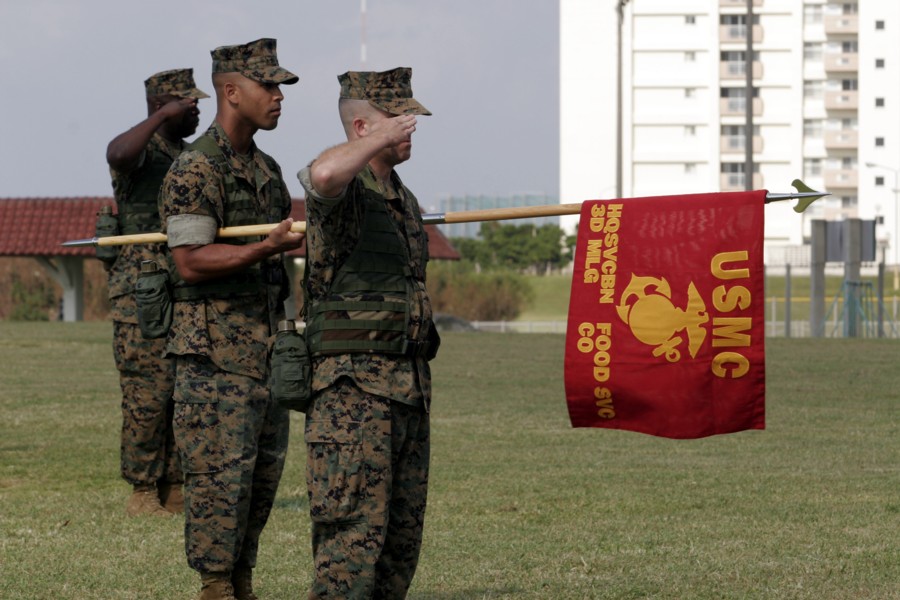
CAMP KINSER, CAMP BUTLER, OKINAWA, Japan (Oct. 13, 2006) -- 3rd Marine Logistics Group's Headquarters and Service Battalion activated a new company Sept. 28 in a ceremony at Robert's Field on Camp Kinser. Food Service Company, H & S Bn., 3rd MLG, is the result of a Marine Corps-wide effort to consolidate food service support.
All assets from 3rd MLG were consolidated to provide easier food support to the MLG and III Marine Expeditionary Force, according to Capt. Gary Spinelli, the commanding officer of the new company.
"With this consolidation, we can ensure the right number of personnel and equipment go to each unit," Spinelli said. "We can support (III MEF) better this way."
Before the consolidation, it was up to individual units to procure their own food support Marines and equipment, according to Spinelli. Now, all they have to do is contact the new unit.
There shouldn't be any problems getting used to the process, as the consolidation process has already happened in the 1st and 2nd Marine Divisions, Spinelli continued.
In addition to the re-organization, the 133 Marines of the company now have capabilities to field the new Food Service Support System.
The new system is like a portable galley, said Cpl. Scott Turek, a field mess noncommissioned officer for Food Services Company. The galley has the capability to serve over 1,700 quality meals per day, not just "exaggerated versions of Meals Ready to Eat," he said.
"Everything they have in the chow halls on base, we have in here," he said, referring to the stainless-steel interior. "This means we can cook a wider variety of food for the troops when we are on deployment. A wider variety means we get the benefit of more vitamins and such, rather than pure calories from the MREs."
Apart from being healthy, a wider variety of food in the field will keep Marines happier, said Lance Cpl. Timothy Graveline, a field mess specialist for the company.
"It'll taste at least a little more home-cooked than the tray meals that are usually served in the field," he said. "Decent food can help us take our minds off the stresses of being down range."
Another benefit is being able to keep the portable galley clean and sanitized, Turek said. Field mess halls are usually constructed out of wood, which is time consuming to construct, and even harder to keep clean.
"I wish we had these in Pakistan," Turek said, referencing his time participating in a humanitarian aid mission following the 2005 earthquake. "We had locals build us wooden permanent facilities that were very hard to keep thoroughly clean."
Subscribe to:
Comments (Atom)


