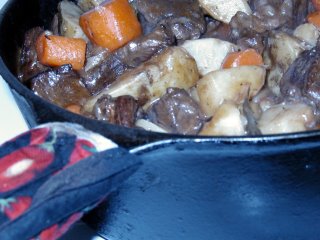
Thursday, October 13, 2016
Filipino chicken adobo
Sailing between the Philippines and Vietnam with the U.S. Navy in the 1970s was my introduction to the cuisine. Once I secured an assignment to the big air base at Cubi Point in 1975, I had plenty of time to explore the the food of Luzon, the northernmost of over 7,000 islands in the nation. Influenced by visitors from neighboring lands and from across the sea alike, Filipino cooks have adapted many unique favors and incorporated many exciting ingredients into their meals. It's a true melting pot.
I enjoyed foods like pancit (stir-fried Chinese-style noodles) by the plateful at the mom and pop cafe on Magsaysay Boulevard and Gordon Avenue in Olongapo. I lived on pancit because it was inexpensive, filling and delicious. Then there were the steamed buns served at the theater on Rizal Avenue and the zingy soup (a form a sinigang) made with local fish from the market and the essence of tamarind.
Chicken adobo was one of my favorite Filipino dishes. We prepared it in the galley on the U.S.S. Stein (DE-1065). And I enjoyed it in many restaurants between Olangapo and Manila. A bowl of steamed rice with a couple pieces of chicken or pork adobo was heavenly. Add my other favorites to the meal -- pancit guisado , lumpia and leche flan -- and you had the makings for a complete Filipino mea.
FILIPINO CHICKEN ADOBO
This dish has been called the Philippine national dish, with good reason. It brings out the best in Filipino cuisine. The unique sauce, made with soy sauce, vinegar and garlic, covers the chicken in a tangy coating, with extra sauce to flavor steamed rice.
This dish is often prepared with large cubes of pork or a mix of pork and chicken. If desired, substitute a whole chicken chicken, cut into eight pieces, for the thighs. For a sweeter sauce, stir 1 teaspoon granulated sugar into the sauce just before serving. If too much sauce remains after the chicken is done, remove it to a waiting plate and reduce the sauce to the right consistency.
Marinade:
3/4 cup low sodium soy sauce
3/4 cup rice vinegar
1 tablespoon oyster sauce
1 teaspoon peppercorns
3 bay leaves
Adobo ingredients:
2 tablespoons vegetable oil
1 medium onion, sliced thin
6 cloves garlic, peeled and crushed
8-10 chicken thighs, skin removed and fat trimmed
Combine marinade ingredients in a large bowl. Place chicken in the bowl and turn pieces to coat. Marinate in the refrigerator for 3 hours or more, preferably overnight.
Heat oil in a heavy skillet or wide-bottomed pan over medium heat. Add the onion and garlic. Saute until lightly caramelized, being careful not to burn. Place the chicken in the skillet or pan with the marinade in a single layer. Pour in just enough water to submerge the chicken by two-thirds. Bring to a boil. Reduce heat to a simmer and cover with a loose-fitting lid.
Cooking until the chicken is fork-tender. Do not let sauce completely dry up. Add additional water in small amounts (1 or 2 tablespoons at a time) if needed. You need a couple tablespoons sauce for each servings, in addition to the sauce that adheres to the chicken and onions. Strain sauce if desired.
To serve, portion steamed rice into individual bowls or plates with one or two pieces of chicken. Drizzle sauce over rice and chicken. Garnish with chopped parsley or minced green onions.
Tuesday, December 13, 2011
Chicken and sausage gumbo
When I began working at the recovery home two years ago, I struggled with the stew. The roux gave me fits. I gave up after four or five months. For the next year, I used a packaged gumbo mix to flavor the pot. Though the residents still enjoyed the dinner, I wanted to give it another try.
My motivation came last spring when I found a copy of Authentic Cajun Cooking, by Chef Paul Prudhomme, at a thrift store in Placerville. Known for "propell(ing) the distinctive cuisine of his native Louisiana into the international spotlight," Chef Paul's gumbo recipes captivated my interest. The makers of Tabasco hot sauce published the booklet around 1982.
I focused on the roux since I was satisfied the rest of the recipe. For the several months I browned the roux in about 10 minutes. While this saved time in the kitchen, I was not happy with the flavor the roux gave the gumbo. I slowly realized the only way to create the best roux was to slow the process down.
I now heat the oil for the roux over high heat, then quickly whisk the flour. I immediately turn the heat down to medium. I find that I need to start incrementally turning the heat down after about 10 minutes. It takes at least 30 minutes to produce a roux with a deep reddish-brown color. To avoid burning the roux, even slightly, I'm constantly stirring the roux. Your whole focus should be the roux.
CHICKEN AND SAUSAGE GUMBOI have tailored this recipe to satisfy the tastes of the residents at work. While I usually use a mild Polish sausage for the gumbo, andouille is the best for the stew.
1-1/2 cups vegetable oil
2 cups all-purpose flour
1 large onion, diced
1/2 bunch celery, diced
3 large green bell pepper, diced
3 quarts chicken stock
1 teaspoon black pepper
1/2 teaspoon white pepper
2 teaspoons granulated garlic
1 teaspoon cayenne pepper
3 tablespoons Louisiana-style hot sauce
2 tablespoons Worcestershire sauce
3 bay leaves
2 tablespoons filé powder
2 pounds frozen okra
4 pounds diced cooked chicken
2 pounds sausage, diced
Heat oil in a heavy skillet until hot. Gradually stir in flour. Immediately turn heat down to medium. Cook, stirring constantly, until roux is dark reddish-brown, about 20 to 30 minutes. Slowly reduce heat under skillet as the roux browns.
After the roux has brown to desired color, add trinity (onion, celery and bell pepper) and stir to combine. Continue cooking until trinity softens. Set aside.
Heat chicken stock in a 12- to 15-quart stockpot to a boil. Add black and white peppers, garlic, cayenne, hot sauce, Worcestershire sauce, bay leaves and filé powder and stir.
Slowly add roux-trinity mixture to stock, stirring constantly. Reduce heat to a simmer and cook for about 30 to 45 minutes, uncovered.
Add okra, chicken and sausage and simmer until chicken is done. Adjust seasoning with salt, pepper and hot sauce.
To serve, place a mound of white rice in the center of a large bowl. Ladle 8 ounces of gumbo around the rice. Serve immediately. Serves 25 (8-ounce) portions. Yield: 6-1/2 quarts.
Saturday, August 06, 2011
Braised beef with summer vegetables video
Chef Steven Karoly cooks a wonderful pot of braised beef with summer vegetables for the El Dorado Western Railroad. Located in the historic town of El Dorado, California, the railroad is a program of the El Dorado County Historical Museum. The maintenance of way crew enjoyed a succulent pot of beef with fresh corn-on-the-cob, new red potatoes, green beans and grape tomatoes. Flavored in a reduced chicken stock, rosemary and garlic rounded out the flavor profile.
Wednesday, July 20, 2011
Sausage and chicken gumbo
Original Tweet: http://twitter.com/SeabeeCook/status/93730880597663744
Sent via TweetDeck (www.tweetdeck.com)
Steven
Sent from my Samsung Captivate(tm) on AT&T
Sunday, June 19, 2011
Chili verde revisited
I've completely reworked my recipe for pork chili verde in the last six months. It's not that my previously published recipe was bad. I've received many kudos for it over a dozen years. Co-workers, campers and residents at work have enjoyed the its tangy combination of canned tomatillos, green enchilada sauce and Anaheim chile peppers.While I've personally enjoyed the stew, I felt it was time to rework the recipe. Since January I've perfected my salsa technique. Salsa verde, a sharply flavored Mexican sauce made with tomatillos and spicy green chile peppers, serves as the basis for the pork stew.
All the necessary flavors are present in the salsa. I find you need a two to one ratio of tomatillos to poblano chile peppers (by weight) for the stew. Tomatillos provide background flavor while poblanos give the stew a rich chili flavor. The combination of two key flavors meld to form a complex flavor profile for the stew.
The new recipe is a blending of culinary techniques. It begins with roasting the tomatillos (husks removed), poblanos and whole peeled garlic cloves. Although I usually roast the vegetables in a hot oven spread out on a sheet pan, you can roast them in a skillet over medium-low heat.
It takes around 20 or 30 minutes to cook the vegetables until they're tender. See that they're cooked to the core, but not overcooked. Set the oven (or use the appropriate heat on a camp oven) for 375 degrees.The process concentrates flavor, drives excess moisture out and gives the vegetables a slight char. Extra char adds extra flavor to the dish within reason. One or two jalapeno or serrano chile peppers add spiciness since the basic recipe is low on the heat scale.
Meanwhile, sear the diced pork on hot oil in a cast iron skillet or Dutch oven. Lightly season the pork cubes with kosher salt and ground black pepper. Carefully place meat in the hot oil.
Sear the meat in batches to avoid overcrowding. Space between the meat cubes allows moisture to quickly evaporate and caramelize. Otherwise, moisture pools, the meat boils and doesn't brown.
Once the meat is ready, run the tomatillos, chiles and garlic (with dried oregano, cumin and chicken base) through the blender. Marry the meat and sauce together in a Dutch oven, bring to a boil and simmer for about 90 minutes or until the meat is tender. Spoon excess fat from the surface of the stew.
This process creates a wonderful stew, one with flavors that surpasses the chili verde made from canned ingredients. Use canned when you're in a pinch, but always remember fresh ingredients will give your chili verde a bright, refreshing flavor.
PORK STEW WITH CHILI VERDE SALSA
1-1/2 pounds tomatillos, husk removed
12 ounces poblano chile peppers
5 cloves garlic
1 or 2 jalapeno chile peppers (optional)
2 tablespoons vegetable oil
1 medium onion, diced small
2 pounds pork butt, diced into 1/2-inch cudes
Kosher salt and ground black pepper, to taste
1 teaspoon dried oregano
1/2 teaspoon cumin
1 teaspoon chicken base
1/4 cup chopped cilantro
Roast tomatillos, poblano chiles, jalapeno chiles and whole garlic gloves in 375-degree oven until tender and slightly charred. Meanwhile, lightly season cubed pork with salt and ground black pepper. Heat vegetable oil in a 5-quart cast iron Dutch (lodge #8) oven medium-high heat.
Saute onion in hot oil until slightly browned. Transfer to bowl. Add 1/2 the pork to Dutch oven. Turn pieces as necessary until well browned on all sides. Transfer meat to bowl. If pot is dry, add 1 tablespoon oil. Repeat process for remaining meat. Transfer meat and onion back into Dutch oven.
Cool vegetables slightly when ready. Place in blender bowl with oregano, cumin and chicken base. Pulse several times to create a smooth sauce. Pour sauce over meat in Dutch oven.
Place lid on Dutch oven. Bake at 350 degrees until pork is very tender when pierced and flavors are blended, about 90 minutes. Fold in cilantro. Adjust seasoning.
Garnish with cilantro leaves and lime wedges. Serve with warm flour tortillas and Mexican rice. Makes about 6 (1-cup) or 8 (3/4-cup) portions.
Saturday, April 09, 2011
Enhancing the flavor of packaged gumbo mix
To prepare the spicy stew, one that most residents enjoy, I combine the contents of two (5-ounce) packages of Louisiana Cajun Gumbo Mix with 4 quarts cold water in a large stockpot. Following the instruction on the package, I bring the pot to a boil, then reduce to a simmer. Four pounds of diced chicken bread and 2 pounds of sliced Polish sausage provide the protein component of the dish. For the first year on the job I served the gumbo as is -- chicken, sausage and gravy. Since the residents enjoyed the stew, I was pleased with the results.
Two months ago I garnished the finished dish with sauteed vegetables. I hadn't done any research to determine the appropriate vegetables to use. I figured a mixture of celery and green and red and green sweet peppers would work. (Though ubiquitous, I avoid onions because a couple residents suffer from an allergic reaction.)
To prepare, I quickly sauteed 5 celery ribs, cut on the bias, 1 red and 2 green sweet peppers, cut into strips, and added them to the gumbo just before serving. I didn't want the vegetables to stew in the gumbo, but to present them in full color and crisp.
I received several compliments for the garnish. Although one or two residents always turn their collective noses at anything vegetable, I've added the garnish to my recipe for the gumbo. My next move will be to practice making the roux and create a scratch-made gumbo.
Sunday, September 13, 2009
Lunch at the engine house
I haven't cooked lunch for the crew at the engine house of the El Dorado Western Railway in six months. Several priority projects kept me from cooking in the months leading to my early June departure for the summer camp job. My labor was more important at that point.Railway President Keith Berry and I first discussed a lunch meal several weeks ago. We both wanted to reward the crew for a summer of notable accomplishments. Twice this summer, Keith called on the volunteers to complete high-profile projects in a short period of time.
Last June the crew rallied to remove the rail, tie plates and rail joiners from the old Southern Pacific yard at Diamond Springs. Once the county gave its approval to remove the track and associated hardware, we had no more than two weeks to complete the track disassembly.
The crew completed the project in eight days. Several volunteers worked every day. The rails and hardware will be used to add a third rail and build the yard at the recently approved El Dorado County Historical Railroad Park in the town of El Dorado.
The county board of supervisors approved the park on August 25. The park will be located on the right-of-way of the Southern Pacific depot in El Dorado.
Volunteers again answered the call this weekend when it became evident that we had to move about 300 ties to a secure location. The ties were open to theft in their current location along the old right-of-way, which is being converted into a riding and walking trail.
Lunch menu
I often use meals at the engine house to try new recipes and to use ingredients that I already have at home. Since I had a 4-pound pork shoulder in the freezer, I knew the menu would be built around a pork dish.
Although chili verde is a favorite -- a dish I enjoy cooking for potlucks -- I wanted to try a flavor combination that was new for me. The idea for a pork stew came to me as I watched Alton Brown's Good Eats television show last week.
In the re-broadcast of his 2005 "Dis-Kabob-Ulated" episode, Brown marinated beef sirloin in a spicy marinade with red wine vinegar and olive oil. Turmeric, smoked paprika and cumin formed the flavor base for the marinade.
Since it isn't practical to make pork kabobs with the tougher pork shoulder, a braised or stewed dish seemed to be the best way to tenderize the meat. I used the marinade to impart flavor, then prepared a tradition stew from that point.
I worked the recipe in my mind Friday evening as I moved railroad ties. I had originally planned to work out the menu and shop that evening. But a 3 p.m. telephone call from Keith brought me to the Diamond Springs yard instead.
When I arrived at the storage site for the ties, the crew asked me what was on the lunch menu for Saturday. I received a chuckle or two when I told them that Keith had pulled me away from my menu planning duties.
They weren't amused when I said that I should be home planning the menu. At that moment, the crew was more interested in my back than culinary skills. Since we didn't quit until 7:30 p.m., I delayed shopping until Saturday morning.
My original thought was to prepare the stew with orange marmalade, but hit on the idea to build the stock with apple juice after moving almost 250 ties. Yams and apples seemed like a natural addition from that point.
Here's the menu for the El Dorado Western Railway lunch:
- Pork stew with yams and apples
- Buttermilk biscuits
- Dutch oven bread pudding
All three dished were prepared in 14-inch Dutch ovens. While I could've made the stew in a 12-inch deep Dutch oven, I customarily use 14-inchers when cooking for crowds.
In the end, 11 crew and guests enjoyed the meal. While I cooked, the crew loaded the 1937 Waukesha engine from the Diamond and Caldor railbus onto Doug's trailer. Doug is going to rebuild the six-cylender engine and return it to the museum next spring.
After lunch, Keith asked if I was going to help move the last 40 or 50 ties at Diamond Springs yard. Lunch over, it was time to get back to work.
PORK STEW WITH YAMS AND APPLESUse the marinade to flavor diced beef for spicy beef kabobs. Prepare the marinade and combine with 3 to 4 pounds of boneless beef sirloin as directed. Alton Brown's recipe has cooking instructions.
4 pounds pork shoulder
8 cloves garlic, minced
4 teaspoons paprika
1 teaspoon turmeric
2 teaspoons ground cumin
2 teaspoons kosher salt
1 teaspoon ground black pepper
2/3 cup red wine vinegar
1 cup olive oil
1 quart apple juice
2 pounds yams or sweet potatoes, diced
3 Granny Smith apples, diced
Cut the pork into 1- to 1-1/2-inch cubes and place into a large bowl or container. Set aside.
In a bowl combine garlic, paprika, turmeric, cumin, salt, pepper and red wine vinegar. Drizzle in olive oil while vigorously whisking.
Pour the marinade over meat and toss to coat. Place in the refrigerator in an airtight container or a zipper-lock bag and marinate for 2 to 4 hours.
In a colander, drain marinade from stew. Discard remaining marinade. Heat a 6- or 8-quart Dutch oven to medium-hot. Brown pork in 2 or 3 batches to avoid overcrowding. Remove each batch to a waiting plate or bowl as it's done.
Return browned pork to Dutch oven. Add apple juice and stir. Season with salt to taste. Simmer until pork is tender, about 60 to 75 minutes. Add yams and apples and continue cooking until yams are tender, about 15 to 20 minutes.
Makes about 12 (1-cup) servings. Serve over buttermilk biscuits.
Tuesday, June 17, 2008
Chili verde addendum
I cooked my chili verde and Mexican rice pilaf last night for a potluck at work. Today was retirement for my manager, whom I've worked for over the past two and one-half years.While packaging the chili for transport to Sacramento, I discovered an error in my original serving calculation, where I said the chili recipe fed 20. It will, but only if you serve smaller portions.
For many recipes, volume is the best indicator of yield in the number of services. The recipe yield is about 3 quarts, or 12 to 16 servings. You'll get 12 servings if you dish with an 8-ounce ladle and 16 with a 6-ounce ladle.
"Man, that chili rocks," said one of the managers. Leftovers are chilling in the break room refrigerator. We're having a green chili fest tomorrow.
Sorry about the fuzzy picture ...
Saturday, February 09, 2008
Black bean chili recipe
- Black bean chili -- diced pork flavored with salsa and canned Rotell tomatoes
- Peppery cheese bread -- a quick bread to soak up juices and flavor
- Apple bread pudding pie -- an apple bread pudding in a pie pan
I'll post the recipes for the bread and pie soon. The idea for the menu comes from the Better Homes and Gardens website.
Alter the chili's heat by selecting a salsa that fits your tolerance for capsicum heat. I find that a medium salsa with Ro*tel-brand tomatoes gives me a flavorful chili that doesn't overpower.
3 pounds lean diced ground pork
2 tablespoons olive oil
1 medium red bell pepper, diced
1 medium onion, chopped
4 cloves garlic, minced
1 teaspoons ground cumin
2 cups thick and chunky salsa
2 (14-1/2-ounce) cans diced tomatoes with green chilies, undrained
2 teaspoons dried oregano, crushed
2 teaspoons chili powder
1/2 teaspoon crushed red pepper
1/2 teaspoon salt
4 (15-ounce) cans black beans, rinsed and drained
Shredded cheddar cheese for garnish
Sour cream for garnish
Heat a 12-inch Dutch oven over medium-high heat. Lightly season pork meat with salt. Brown pork in hot oil in 2 to 3 batches to avoid overcrowding. Remove each batch of pork to a bowl after it's browned.
Add additional olive oil if needed and heat until shimmering. Sweat bell pepper, onion, garlic and cumin together until soft. Add reserved pork and juices to Dutch oven.
Stir black beans, salsa, undrained tomatoes, oregano, chili powder, crushed red pepper and salt into mixture in Dutch oven. Bring to boil; reduce heat and simmer, covered, for 60 minutes until pork is tender.
Uncover and add beans to Dutch oven. Simmer about 15 minutes more or until desired consistency is obtained. Check seasoning. Ladle into soup bowls. Sprinkle each serving with Cheddar cheese and a dollop of sour cream if desired. Serves 8 to 12.
Thursday, September 20, 2007
Tex-Mex on the High Seas
SOUTH CHINA SEA (Sept. 16, 2007) - Culinary Specialist Seaman Casey Steinhauer, of Huble, Texas, prepares carne guisada in the aft galley aboard USS Kitty Hawk (CV 63). Casey is preparing 1,500 servings of carne guisada as one of the dinner entrees. Kitty Hawk is nearly four months into her summer deployment from Fleet Activities Yokosuka, Japan.U.S. Navy photo by Mass Communication Specialist Seaman Kyle D. Gahlau.
Wednesday, August 08, 2007
Beef Stew with Sundried Tomato Pesto
Yes, I'm cooking. From recent posts, it may not seem that way. Except for two meals, I really haven't prepared anything unique.
As you can see from by blogs this week, photography and hiking (the two go hand-in-hand) have occupied much of my time. After shooting the Glen Alpine Resort in the full noon sun, I thought it'd be nice to shoot during the "magic hours" when brilliant images flow out of your camera.Even skilled photographers have difficulty shooting when the sun is high in the sky. Images easily wash out. You can only add so much compensation to a picture that features a corrugated tin roof before it's underexposed.
There are two magic hours -- one at sunrise and the other at sunset. The quality of your photographs will amaze you when you shoot 30 to 60 minutes after the sunrise or before sunset. It's also called the golden hours because of the warm, saturated colors associated with the beginning and end of the day.
With sunrise just after 6 a.m., I haven't managed to wake up early yet. I'm enjoying a week of sleeping in until 7 or 8 each morning. I may rise early tomorrow or Friday morning.It's much easier to eat an early dinner and catch the setting sun. We left camp at 5 O'clock and walked through the Tallac Estates. Shooting in the late afternoon sun was a good exercise in adjusting for lighting challenges of the late afternoon.
I shot a few semi-successful pictures directly into the sun as it dropped into the trees over the Pope House (see photo to right). I certainly need to improve.
After our stroll through the Tallac historic site, we drove up to the Angora Ridge Lookout to shoot the sunset. I posted my most successful photograph yesterday here.
So much for photography. Let's turn to beef stew. This is a food blog, after all.
A richly flavored stew is the perfect dish for a lazy day in camp. A sturdy cast iron Dutch oven, plenty of hot coals from the fire and a little patience is all you need to turn a chuck roast into tender cubes in a rich gravy. This recipe has a nice Mediterranean flare it it with the addition of sundried tomato pesto and pepperincini peppers.
You don't need top heat for this recipe. Bottom heat is sufficient since the stew is gently simmered over a hot fire for one to two hours. Control the heat by adjusting the concentration of coals under the pot. Add hot coals under the pot if the stew isn't simmering.
If it's simmering vigorously or boiling, remove coals and set them aside. You should see a gentle simmer, with bubble barely breaking the surface.
I use 2 to 3 pounds of chuck roast for my stews. The amount depends on the quantity of meat in the package. Adjust the amount of beef stock or broth accordingly. You don't need a lot of extra gravy with this stew recipe since it doesn't call for potatoes or carrots.
BEEF STEW WITH SUNDRIED TOMATO PESTO2-1/2 pounds chuck roast, cut into 3/4-inch cubes
Salt and black pepper, to taste
1 cup all-purpose flour
2-3 tablespoons olive oil
1/2 large onion, chopped
3 cloves garlic, minced
2-3 cups beef stock or broth
4 tablespoons sundried tomato pesto
6 pepperincini peppers, stems removed and chopped
1 large bay leaf
1/4 teaspoon crushed red pepper
1-1/2 teaspoons dried thyme
Pre-heat 6- to 8-quart Dutch oven over a hot fire. Lightly season cubed beef chuck roast with salt and ground black pepper. Dredge seasoned beef in flour. Shake off excess flour and set aside. Reserve remaining flour.
Add half the olive oil to the hot oven. Brown beef in in hot oil in 2 batches to avoid overcrowding. Remove each batch of beef to a plate after it is browned. Use the remaining oil for the second batch. Saute onions in hot oil until tender.
Return browned beef to Dutch oven. Add beef stock or broth, sundried tomato pesto, pepperincini peppers, bay leaves, crushed red pepper and thyme to Dutch oven. Stir, replace lid and set inside oven. Gently simmer for about 1 to 1-1/2 hours, until beef it tender.
Prepare a slurry by whisking the remaining dredging flout into cold water. Remove lid and pour slurry into stew. Immediately stir until thickened. Replace lid and return to oven and simmer 10 to 15 minutes. Thin with beef stock or broth is too thick.
Total cooking time for the stew will be approximately 1-1/2 to 2 hours. Serve over mashed red potatoes or penne pasta. Serves 6 to 8 (1-cup) portions.
Friday, February 23, 2007
Phil Reader's Beef Stew
Phil grew up eating his Grandmother Bessie’s home cooking and fondly remembers her warm beef stews on cold winter nights. Karell had never really gotten into stewing, but after a couple of false starts and coaching from what Phil could remember from his grandmother’s stew, they put their crockpot to work, producing a thick, hearty and wholesome stew. Phil says it almost rivals Bessie’s and there are rarely any leftovers, so that is a good sign that they are on the right track with this recipe.
BEEF STEW
Vegetable oil
1 cup flour
Pepper to taste
Salt to taste
1 pound stew meat, 1-inch cubes
3 cups water
2 carrots, 1-inch cubes
2 celery stalks, 1/2-inch slices
2 russet potatoes, 1-inch cubes
1 package gravy or stew mix
Dredge the stew meat in flour, salt and pepper mix. Brown beef in oil in deep skillet. Heat water in crockpot on high. Add carrots, celery and potatoes. Place browned beef in pot with other ingredients and gravy or stew mix. Stew on high for 1-1/2 or 2 hours until all ingredients are soft and ready to eat.
Serve with fresh baked bread and garden salad.
Saturday, December 09, 2006
Chili Verde
This is essentially the same recipe that I posted last January in response to Sunset magazine's "traditional" chili verde with tomatoes. I tweaked the recipe by adding a large can of green chili enchilada sauce and reducing the canned Anaheim chilies to one can.
CHILI VERDE
Many supermarkets stock canned tomatillos. You'll find them on the Mexican isle. Use a Lodge #10 Dutch oven or 12-inch camp oven for this recipe.
2 tablespoons vegetable oil
4 pounds boned pork shoulder (Boston butt), fat-trimmed and cut into 2-inch cubes
Salt and pepper, to taste
3 onions (2 pounds total), cut into 1/4-inch-thick wedges
5 large cloves garlic, minced
3 tablespoons ground cumin
1 (28-ounce) can whole tomatillos
1 (28-ounce) can green chili enchiladas sauce
1 (14-ounce) can chicken broth
1 (7-ounce) can whole green chilies, chopped
2 tablespoons chopped fresh oregano leaves
2 bay leaves
Chopped fresh cilantro
Lime wedges
Heat vegetable oil in a 7-quart cast iron Dutch oven over medium-high heat. Meanwhile, lightly season cubed pork with salt and ground black pepper. When hot, add 1/3 the pork. Turn pieces as necessary until well browned on all sides, 8 to 10 minutes total. Transfer meat to a bowl. If pot is dry, add 1 tablespoon oil. Repeat process for next 2 batches to brown pieces on all sides.
Reduce heat to medium. Discard all but 2 tablespoons of leftover pork fat in Dutch oven. Add oil, if necessary, to bring the total to 2 tablespoons. Add onion, garlic and cumin. Cook, stirring occasionally, until onions are soft, about 8 minutes.
Return meat and any accumulated juices to Dutch oven. Crush tomatillos with your hand and place in Dutch oven. Add enchiladas sauce, broth, chilies, bay leaves and oregano to Dutch oven. Bring chili mixture to a simmer.
Place lid on Dutch oven. Bake at 350 degrees (17 coals under oven and 8 on lid) until pork is very tender when pierced and flavors are blended, about 90 minutes. Adjust seasoning. Serve topped with cilantro leaves. Garnish with lime to squeeze over chili. Makes 12 (1-cup) or 16 (3/4-cup) servings.
MEXICAN RICE PILAF
Here's a recipe that's inspired by James Beard and Rick Bayless. In Beard's classic 1972 work, American Cookery, he said, "This dish has little relationship to genuine Spanish or Mexican rices."
Instead, Beard attributes its Hispanic title to the addition of tomatoes and its creation by a resourceful American cook who was "thinking of new ways to dress ordinary food."
Bayless' classic red tomato rice is patterned after the Mexican rice that we all know and love. "Red with bits of tomato, sweet with onions and garlic," said Bayless in Rick Bayless's Mexican Kitchen.
In his bid for authentic Mexican dishes, Baylesss rice contains all the elements of good flavor: "good rice, classically made in the fluffy pilaf (fried raw rice) style, shot through with the pure essence of Mexican flavor -- even down to the sprinkling of chopped cilantro just before serving."
2 tablespoons olive oil
1 large onion, sliced
3 large garlic cloves, sliced
2 cups long-grain rice
1-1/2 cups salsa
4-1/4 cups chicken broth
2 bay leaves
1 tablespoon dried oregano
1/2 cup chopped cilantro
heat a 10-inch Dutch oven over medium heat. Add olive oil and heat. When hot, sweat onion and garlic until soft and a little color starts to show. Add rice and stir to coat with oil. Saute rice and aromatics until rice starts to brown, about 5 minutes. Stir frequently to avoid burning the rice.
Add the salsa and stir for a minute as the salsa sears and releases its aroma. After the salsa reduces a bit, add chicken broth, bay leaves and oregano. Season with salt and stir. Bring to a boil, stir once and place the lid on the oven.
Bake with charcoal briquettes for 350 degrees (16 briquettes on the lid and 5 underneath oven) for about 20, until done. Remove from heat and let rice set for 10 minutes. Sprinkle cilantro over rice and use a fork to fluff the rice and stir in the cilantro. Serves 12 (1-2-cup) portions.
Monday, August 07, 2006
A Quick Dutch Oven Beef Stew
Last Tuesday, we escaped the constant driving wind of Oregon's Odell Lake and set out for a picnic at nearby Davis Lake. We camped at Davis Lake, which is located about 20 miles by road northeast of Odell, in 1990.We remembered that the Davis Lake campgrounds and picnic areas were set in among the lodgepole pine forest between several tall volcanic peaks. To our advantage, the area was much warmer and calmer than Odell Lake.
Odell Lake is know for its "quite brisk" winds. The U.S. Forest Service webpage for Odell Creek Campground (where we camped) says "whitecaps occasionally form." This isn't quite accurate -- they form everyday, usually in the afternoon.
We found ourselves looking for activities away from the lake to escape the winds.We never made it to Davis Lake for the picnic. Two factors impeded our decision to find a spot along Odell Creek: First, Forest Road 4660, the main access into Davis Lake from the south, was closed at the Odell Creek bridge. Contractors were strengthening the bridge.
And we discovered that the lodgepole pine forest centered around the lake was burned on June and July 2003. Although we were able to reach the lake once the construction workers went home at 5 p.m., the area wasn't conducive to a picnic.
QUICK DUTCH OVEN STEW
Please don't let the adjective quick fool you. The stew won't be ready in 30 minutes or less. Instead, this meat dish is quickly assembled before letting it simmer for 1-1/2 to 2 hours. Unlike traditional beef stew recipes, the diced chuck won't brown as the moisture in the marinate impedes browning. The peppy steak sauce compensates for the missing flavor from the deleted step.
2 pounds chuck roast, 1-1/2-inch dice
1 cup A1 Steak Sauce Marinade
1 tablespoon olive oil
1 large onion, sliced
2 cloves garlic, minced
1 (14-ounce) can low-sodium beef broth
2 large carrots, 1/2-inch slice
2 medium potatoes, 1/2-inch dice
Place meat in 1-gallon zipper top bag and coat with marinade. Set in cooler for 30 minutes. Pre-heat 12-inch Dutch oven over medium heat. Sweat onions and garlic in oil until soft. Place meat in oven with broth. Stir and simmer approximately 1-1/2 hours, until meat is tender. Add carrots and potatoes and continue cook about 30 minutes, until done. Serve with toasted garlic bread, biscuits or cornbread.
Monday, May 08, 2006
American Chop Suey
I have a similar goulash story. I too never heard the term goulash applied to the macaroni dish until I got off active duty in 1979 and met my wife. The Navy recipe card called the dish that you described "American chop suey."I came across your website while doing a little preliminary exploring about Navy food. I am a free lance writer and especially like to write humorous pieces about food and wine. Having served in the Navy during 1969-73, I have thought about doing something relating to Navy chow, though I'm not too sure in what way. Sometime these things require a long incubation, during which time I do some research. Sometime these things require a long incubation, during which time I do some research. One reason I wanted to contact you now is to ask whether you can recommend any books that talk about how recipes were developed in the Navy in past times, let's say in the period from WWII to Vietnam. I would be interested in reading about specific recipes as well as the general topic. I'd also like to know about how much leeway a cook has in 'bending' recipes as need be. I am sure galley cooks must have some very funny stories in that regard.
I notice that you have a Hungarian last name. I am Hungarian on my mother's side, and you might enjoy this story as much as I did when it happened. I was a yeoman aboard the USS Enterprise, and one day my assistant came back from lunch and said they had "goulash." Of course my ears perked up and I went down to the alley ... Only to find elbow macaroni with ground beef and some tomato and what not. I tried to explain to my shipmate that this concoction has nothing to do with goulash. But I couldn't get it across to him. He was from the mountains of West Virginia, and I was surprised recently to see in June Carter Cash's cookbook that she had exactly the same idea of goulash!
Goulash often refers to a one-pot mixture of "stuff," kind of a culinary potpourri. It differs greatly from the Hungarian dish, a stew that's often composed of beef, onions, red peppers and paprika. Dave Desiderio, a Viet Nam War brown water sailor, said:
I remember the chow at ... was good. I particularly remember what I call "American Chop Suey" -- macaroni noodles and hamburger all mixed up. I love that stuff, especially with Tabasco sauce. Breakfasts were typically GI, and I've always liked that stuff, too. Yes, I like SOS.The first time Debbie invited me to her grandmother's house for dinner, she proudly announced they were having goulash for dinner. Unlike your initial reaction, I puzzled over her Missouri-born and raised grandmother cooking a traditional Hungarian dish (a dish I've only had a few times in my life).
Although their goulash didn't fit my view of the family profile, I enjoyed the dish. And I discovered the dish easily receives copious qualtities of hot sauce.
Sunday, November 06, 2005
Beef Stew
Here's the recipe:

BEEF STEW
2 pounds beef chuck roast, cubed
1 medium onion, chopped.
1 cup red wine
1-1/2 cups beef broth
2 tablespoons Worcestershire sauce
1 tablespoon tomato paste
2 bay leaves
1 teaspoon dried thyme
3 tablespoons all-purpose flour
2 medium carrots, cut into 1/2-inch rounds
4 medium potatoes, cut ieighth'shths
Pre-heat oven to 350 degrees. Lightly season cubed beef chuck roast salt and ground black pepper. Brown beef in hot oil in a 3-quart Dutch oven in 2 to 3 batches to avoid overcrowding. Remove each batch of beef to a plate after it is browned. Sauté onions in hot oil until browned, about 5 minutes.
Return browned beef to Dutch oven. Add red wine, beef broth, Worcestershire sauce, tomato paste, bay leaves and thyme to Dutch oven. Stir, replace lid and set inside oven. Bake for 1 hour. Prepare a slurry by whisking flour into 1/2-cup cold water. Remove lid and pour slurry into stew. Immediately stir until thickened. Replace lid and return to oven.
Meanwhile, prepare vegetables. Bring 1-quart salted water to a boil in a medium saucepan. Add potatoes and carrots. Reduce heat to a simmer and continue cooking until fork tender, about 10 to 15 minutes. Drain vegetables. Remove stew from the oven Stir vegetables into the stew. Return stew to the oven. Continue cooking until beef is tender.
Total cooking time for the stew will be approximately 1-1/2 to 2 hours. Makes about 2 quarts.
Wednesday, August 10, 2005
Apple and Bratwurst Chili?
Anyone who's paid any attention to 'Round the Chuckbox since its February inception, knows that I'm a culinary traditionalist, especially when it comes to meat and chili peppers. Chili in my camp should be red (green's okay too) and be loaded with plenty of beef or pork chunks.
Lorie Roach of Buckatunna, Mississippi thinks differently, according to an Associated Press story and recipe in today's Sacramento Bee Taste section.
But I suppose she has all braging rights on the issue. Roach was recently crowned as "America's best campfire chef" by a Central California winery.
Her winning recipe, a sweet chili with Granny Smith apples, bratwurst sausages, canned chickpeas and sweet red and green bell peppers, is a quick meal that can be prepared at home and assembled over the the campfire.
It's not that I dislike any of the individual ingredients. I buy sweet onions by the bag. And I love a good old-country sausage that's been grilled over an open fire. Place the bratwurst on a large bun, bury it in caramelized onions and I'm happy.
Just leave the apple out of my chili or my bratwurst sandwich. Apples like tart Granny Smiths belong in pie or cobbler. Or in braised German red cabbage where they balance the sharp overtones of cider vinegar.
What's my issue? In my camp, apples and bratwurst don't belong in chili. Keep it red (or green).
So what happens if I chance upon the Roach family in their beloved Great Smoky Mountain National Park? I'll smile and graciously accept a bowlful of their sweet onion, apple and bratwurst campfire chili.
I can't promise that I'll have seconds, and I may share a bowl of my chuckwagon chili.
Who knows? I might like it!