Showing posts with label cookbook. Show all posts

Thursday, October 02, 2014

Throwback Thursday: Recipe Use Suggestions

I was working on my 14th notebook when I wrote this article in May 2005. Since that time, my use of journals has risen sharply from one or two each year to four or five. No. 47 carried me through the end of summer camp season in August. Today, I'm 83 pages into journal no. 48. 

Chefs use cookbooks for a variety of reasons. Most of my professional acquaintances use cookbooks to garner fresh ideas for their kitchens. They don’t view the recipe as a hard-fast formula. Instead, chefs use them as a starting point for their next creation.

These recipes are written to my tastes. They're here to give you an idea of how I cook in camp. It's up to you to try the recipes and to adapt them to your likes and dislikes. There's plenty of room for change.

Use the recipes as a guide. Experiment and try different approaches. Alter a few ingredients if some are not to your liking. For example: I can’t stand celery. The stuff gags me. I can’t get past its stringiness and rough texture. But there are recipes that benefit from its nutty flavor. Unless I can strain it out of the dish out of the dish, I add whole stalks and fish them out later.

Here are a few tips to get you started:
  • Before your camping trip, select several recipes and test them at home first. Unless you’re already an experienced camp cook, it’s wise to try each recipe in a familiar kitchen. Once you've figured out each recipe’s idiosyncrasies, you’ll be better equipped to prepare it in camp.
  • Read each recipe twice. With a little practice, you’ll soon visualize the finished product in your mind. This is valuable to see if it’s the dish that you want. It’ll also aid in preparing your grub list and set the instructions in your mind so you don’t have to keep referring back to cookbook while you’re cooking.
  • Gather all ingredients and cookware before starting. A bowl full of flour, salt and spices is useless when an empty can reminds you that you used the last of the baking powder last week. Sometimes, you can make a quick substitution. You can, for example, substitute baking soda with an acid for baking powder in most recipes. But you’re stuck if you discover that you didn't pack the baking soda.
  • Take notes. I keep a camping journal. And since food has been my professional life, you might expect to find more notes about our camp meals than other topics. Even if you just use the journal to chronicle you cooking adventures, it’s a valuable tool. Use a journal to record: what works and what doesn't; what you liked and didn't like about a dish; ideas to improve a dish’s flavor; and creative menus for future meals. And, if you decide to write a cookbook, you’ll already have a notebook (I’m on number 14) bristling with recipes and stories of your culinary adventures.

Wednesday, April 10, 2013

Cookbooks for camp

My summer library
I've accepted a summer job as the chef for a family camp. The camp is located about three and one-half hours north of my Diamond Springs, California, home, in the Sierra Nevada Mountains near Mt. Lassen. The job begins at the beginning of May.

Since driving home on my one day off each week will be impractical, I find myself carefully considering the cookbooks, tools and other resources to pack for the summer. I plan to pack up to 20 cookbooks in a plastic storage tub.

In addition to professional cooking resources (The Professional Chef, The Professional Baker, Charcuterie, Understanding Baking and The Flavor Bible), an eclectic mix of cookbooks should help liven the menu. I've browsed the cookbook stacks at The Bookery twice in the past week. With hundreds of cookbooks to choose from, I should be able to locate most cookbooks written in the last 10 to 20 years.

I will probably visit The Bookery one more time before we leave home. What cookbooks would you add to the library? This question is for my professional colleagues as well as home cooks. Any new purchase will fill in gaps in the library. Please note that I'm not considering Dutch oven books at this point as I have plenty.

Thursday, February 05, 2009

Food For Fifty recipes posted to PantryWorks

I have used the classic quantity cookbook, Food For Fifty (published by Prentice Hall), since I purchased a copy for a college class in 1979.

Although I recommend the book to all cooks when feed large groups, it has always carries a hefty price tag. The 12th edition currently sells for about $87 on Amazon.com (discounted from the $114 list price).

If you occasionally need large quantity recipes and don't want to purchase the book, many (or all?) of the recipes have been posted to the PantryWorks.com. I ran across the recipe website today while searching for a recipe for dumplings. You can access the Food For Fifty recipe listings here.

I don't know if Prentice Hall has given PantryWorks their blessing to post the 735 recipes. PantryWorks has posted recipes from numerous other cookbooks. But feel free to use this recipe resource as long as it remains.

Monday, October 24, 2005

More on "The Complete Guide to Making Sauces"

I can't find any information on The Complete Guide to Making Sauces on the Internet.

The publisher's website at Alibris also draws a blank. A search for author Christine France yields 53 books that she wrote or co-wrote. Titles include everything from Chocolate to Low Calorie Desserts to The Barbecue Book. Tomatoes is another popular theme.

But no The Complete Guide to Making Sauces. She did write a book on Salsas, Dips, Dressings, and Marinades, as well as Cook's Book of Sauces.

Quick and Easy Sauces: Over 70 Delicious Recipes to Transform Sweet or Savoury Dishes is the closest title to the book that I purchased at Borders.

Since the tag line for The Complete Guide to Making Sauces says, "Transform your cooking with over 200 step-by-step great recipes for classic sauces, toppings, dips, dressings, marinades, relishes, condiments and accompaniments," I suspect that this book is a compilation of her prior cookbooks on everything related to sauces, salsas and the like.

Friday, September 16, 2005

Cooking for Crowds for Dummies

.
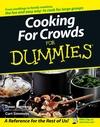
Cooking for Crowd for Dummies by By Dawn Simmons and Curt Simmons is my latest acquisition. I'm a late convert to the Dummies series. I sorta had a "holier that thou" attitude toward the books, especially any that deal with cooking.

I reasoned, why do I need these books? I'm a professional cook, after all.

This may be the book for you if you often feed crowds. Give it a try. The $20 price tag may be worth the expense. Here's the link:

http://www.dummies.com/WileyCDA/DummiesTitle/productCd-0764584693.html

Thursday, September 15, 2005

Newsletter from CowboyCooking.com

I received an e-newsletter today from the Bar E Ranch at CowboyCooking.com.

It has news of:
  • New products--a chuckwagon grill companion to the chuckwagon fireplace set, 59-gallon wine barrel and Lodge tote bags.
  • 4th place at the chuckwagon cookoff at Gladewater, Texas.
  • Chuckwagon Recipes #3, a new cookbook by sisters Sue Cunningham and Jean Coats.
  • Photographs in the style of the old west.
Subscribe to the newsletter by signing up at the bottom of each webpage at CowboyCooking.com.

Thursday, August 25, 2005

Cee Dub’s Latest Venture: Cowboy Cooking at It’s Finest

How many like Western cooking? For many, like me, who've never spend any measurable time tending cattle on a Western ranch, Ranch food brings the "Yee haw!" out of us.

Ranch food stirs images of campfires and Dutch ovens lined up over a long cookfire. You get a vision of cookie laboring under the noonday sun behind a rustic chuckwagon. Chicken fried steaks, scratch biscuits and Amy Tanner's apple crunch are dishes you expect on the range.

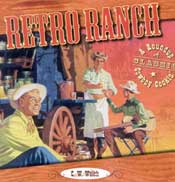
C.W. "Butch" Welch has captured the essence of Western ranch cuisine in Retro Ranch: A Roundup of Classic Cowboy Cookin', published this spring by Collectors Press of Portland, Oregon Cee Dub explains the emphasis of Retro Ranch: "The cuisine, if it could be called that, leans toward the simple side."

Simple? Yes. A quick scan of the horizon reveals many recipes in Retro Ranch use 10 or less ingredients and need about an hour to cook.

Simple it may be simple, cowboy cuisine harkens back to a simpler time. The fare in Retro Ranch doesn't mean the food that lacks flavor or character. This is the kind of food IDOS hands love to eat. It's plain, rich and full of flavor. Retro Ranch recipes are classic comfort food.

As the cookbook title implies, Retro Ranch food is food from our past. Retro Ranch has the look and feel of a 1950s cookbook with its grainy photographs and drawings. These are the same enhanced images we saw in cookbooks and magazines of the era.

If you read Life or Look or remember the recipes and photographs in cookbooks like Fanny Farmer from the 1950s, you'll love Retro Ranch.

These recipes are at home on the range with the beginning Dutch oven cook. Prepared in camp or in your suburban ranch kitchen, Retro Ranch vittles will please the pallet today just as they did 50 years ago.

I say run to the general store today and pick up a copy of Retro Ranch. Copies of the cookbook, packed with recipes from a bygone era, are available for purchase at CeeDubs.com for $16.95 plus shipping and handling. You can also order by calling Cee Dubs Dutch Oven and Camp Supplies at (208) 983-7937.

"We don't need to pore through historical accounts of that era ... to learn more about cowboy cooking." Cee Dub's right. Just get Retro Ranch and you'll soon enjoy the "tantalizing odors of simmering briskets, cowboy beans and peach cobblers plus the subtle smell of camp coffee ...."

This reveiw was originally published in the Summer 2005 issue of the Dutch Oven News.

Sunday, June 05, 2005

Dutch Oven Layered Breakfast

Ranch food stirs images of campfires and Dutch ovens lined up over a long cookfire. You get a vision of cookie laboring under the noonday sun behind a rustic chuckwagon. Chicken fried steaks, scratch biscuits and Amy Tanner's apple crunch are dishes you expect on the range.

That’s the kind of food you'll find in C.W. "Butch" Welch’s new cookbook, Retro Ranch: A Roundup of Classic Cowboy Cookin', published this spring by Collectors Press of Portland, Oregon.


Dutch oven layered breakfast with roasted corn-on-the-cob and cottage fried potatoes.

Breakfast is one of my favorite meals in the wilderness. Nothing hits the spot like savory breakfast sausage or smoked bacon sizzling over the campfire. (Steak and baked potatoes are my next favorite meat.) So, Cee Dub's Dutch oven layered breakfast hit the spot for dinner last night.

For the test run I tweaked the layered breakfast some. Not to worry because Cee Dub often preaches this on his cable television shows. He’s encourages his viewers to use what’s left I the grub box.

My philosophy is similar. A recipe is a starting point. You then add and remove ingredients to suit your taste buds (within the structural limits of the recipe, of course). You'll often find that I’ve rewritten recipes on 'Round the Chuckbox to fit my family’s tastes.

I cut the recipe in half and baked it in a 10-inch Dutch oven. I then added a layer of diced roasted Anaheim and jalapeno chile peppers to the dish. Instead of mustard, I seasoned the breakfast with cumin and minced garlic.


Anaheim and jalapeno chile peppers raosting over the campfire. Once the skin charred, I wrapped the chilies in plastic wrap for a few minutes to make removal of the skin easier. Posted by Hello

DUTCH OVEN LAYERED BREAKFAST

Cee Dub's layered breakfast is kind of a savory bread pudding with a cheesy crust. It uses meat and savory seasonings like dried mustard to form a custard-like casserole that'll overwhelm your taste buds. Use this recipe as a springboard to flavorful breakfast casseroles, like my Southwestern version (see description above).

I've printed the recipe as it appears in Retro Ranch. Be sure to bake the casserole for the full time. You get a soggy mess if you don't. I recommend adding the cheese halfway through baking to prevent burning. Add the cheese sooner for a crispier crust.

Butter
10 to 12 slices bread, trimmed and cubed
2 cups ham or sausage, cooked and diced
12 ounces sharp cheddar cheese, shredded
6 to 7 eggs, lightly beaten
2 tablespoons chopped onion
3-2/3 to 4 cups milk
1 teaspoon dry mustard
Salt and pepper, to taste

Preheat 12-inch Dutch oven lid by rimming with 18 to 22 burning briquettes. Butter oven; add bread, sprinkle meat over bread and cover with cheese. Combine remaining ingredients and pour over cheese. Using 6 to 7 briquettes under oven and briquettes on lid, bake until knife inserted in center of mixture comes out clean. To bake in conventional oven, preheat to 325 degrees. Butter 9- x 12-inch baking dish; bake 1 hour.

Serves 4 hearty to 8 lighter portions. Cut recipe in half for a 10-inch Dutch oven.

Thursday, June 02, 2005

Review of Cee Dub's New Book Retro Ranch

I wrote a review of Retro Ranch: A Roundup of Classic Cowboy Cookin', by C.W. "Butch" Welch. Retro Ranch is published by Collectors Press of Portland, Oregon. For purchase information, see CeeDubs.com or go to Collectors Press.

The review will appear in the summer issue of the Dutch Oven News, published by the International Dutch Oven Society. I will post the review sometime in August.

Monday, May 23, 2005

Recipe Use Suggestions

Chefs use cookbooks for a variety of reasons. Most of my professional acquaintances use cookbooks to garner fresh ideas for their kitchens. They don’t view the recipe as a hard-fast formula. Instead, chefs use them as a starting point for their next creation.

These recipes are written to my tastes. They’re here to give you an idea of how I cook in camp. It’s up to you to try the recipes and to adapt them to your likes and dislikes. There’s plenty of room for change.

Use the recipes as a guide. Experiment and try different approaches. Alter a few ingredients if some are not to your liking. For example: I can’t stand celery. The stuff gags me. I can’t get past its stringiness and rough texture. But there are recipes that benefit from its nutty flavor. Unless I can strain it out of the dish out of the dish, I add whole stalks and fish them out later.

Here are a few tips to get you started:
  • Before your camping trip, select several recipes and test them at home first. Unless you’re already an experienced camp cook, it’s wise to try each recipe in a familiar kitchen. Once you’ve figured out each recipe’s idiosyncrasies, you’ll be better equipped to prepare it in camp.
  • Read each recipe twice. With a little practice, you’ll soon visualize the finished product in your mind. This is valuable to see if it’s the dish that you want. It’ll also aid in preparing your grub list and set the instructions in your mind so you don’t have to keep referring back to cookbook while you’re cooking.
  • Gather all ingredients and cookware before starting. A bowl full of flour, salt and spices is useless when an empty can reminds you that you used the last of the baking powder last week. Sometimes, you can make a quick substitution. You can, for example, substitute baking soda with an acid for baking powder in most recipes. But you’re stuck if you discover that you didn’t pack the baking soda.
  • Take notes. I keep a camping journal. And since food has been my professional life, you might expect to find more notes about our camp meals than other topics. Even if you just use the journal to chronicle you cooking adventures, it’s a valuable tool. Use a journal to record: what works and what doesn’t; what you liked and didn’t like about a dish; ideas to improve a dish’s flavor; and creative menus for future meals. And, if you decide to write a cookbook, you’ll already have a notebook (I’m on number 14) bristling with recipes and stories of your culinary adventures.