
Showing posts with label camp 2006. Show all posts
Showing posts with label camp 2006. Show all posts
Tuesday, August 29, 2006


Tuesday, July 11, 2006
Camp -- Post-camp Menu Evaluation
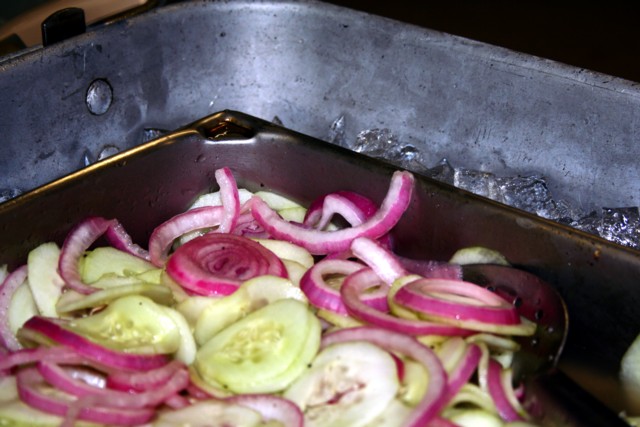 Four large cucumbers, sliced on a mandoline, fit into a 2-inch, half-sized hotel pan.
 With camp over, I still have a few post-camp tasks to get done before I set it aside for the better part of eight or nine months. In the week following camp, I like to evaluate the menu, review purchases and analyze the end-of-camp inventory while my memory of camp is fresh.
In past years I've focused my attention on lunch and dinner entrees and the Thursday night banquet. Most campers have accepted these meals. I don't think there's really an issue of running the same meals year after year.
This year I need to focus my attention on the salad bar. I've been unhappy with my reliance on tomatoes and cucumbers for a couple years.
Tomatoes will remain popular. The Northern California FC Camp is always scheduled when the tomato crop is in full "bloom." Camp staff savor tomatoes marinated in an olive oil based vinaigrette with a chiffonade of basil. Tacos, salsa and hamburgers are also well complimented by fresh tomatoes.
So I plan to serve tomatoes on the salad bar in some form each day, even though consumption varies from year to year. This year we only used two and one-half flats (2 layers packed 5 by 6 each). We've used up to five flats in years past.
Cucumbers, more than any other produce item, tends to be inventory driven. Each year I've purchased one flat of 36 large cukes. To exhaust a seemingly endless supply, I push cucumbers on the salad bar each lunch and dinner. The two cucumber salads that were moderately popular were traditional cucumber and onion and a cucumber and tomato salad with a creamy Italian dressing. But four cucumbers will last two or three meals.
Next year, I plan to reduce my purchase of cucumbers to a dozen and run a cucumber salad twice during the week, not daily.
My current task is to get out of this salad rut and locate a few kid friendly salad ideas. Until now, many of our salads were placed on the menu to please the adult staff. Traditional salads like cole slaw, potato and macaroni salads work well in the camp setting. My task now is to menu several kid pleasers, while satisfying the tastes of the adults.
More to come in the weeks ahead...
Monday, July 10, 2006
Camp -- 2006 Kitchen Camp Song
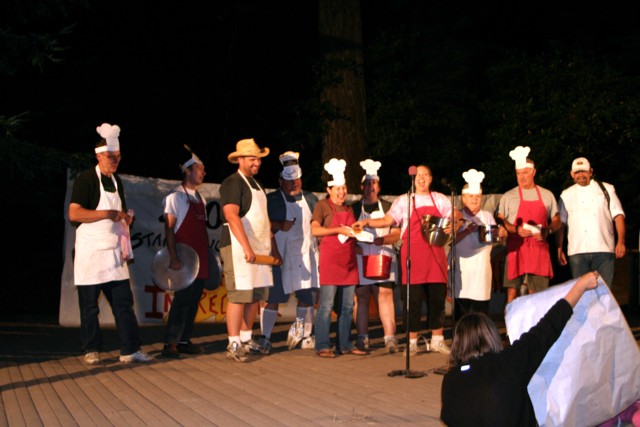
Early in the week I learned that my second cook and dining room host (mother and daughter) were scheming to get us all on stage during the talent show. Carol and Elisa came to camp with with words in hand and a skit worked out. We spent Friday working on the song in between meals.
It worked.
All the cooks joined me on stage to sing this song to the tune of the Ballad of the Green Berets:
2006 KITCHEN CAMP SONG
At the Florida College Camp,
We have come to cook and sweat,
And we know that when Saturday comes
All the kids willa been well fed.
Should we by chance cough or sneeze
Just be sure to use those sleeves
Everyone knows that's what they're for
And to wipe things off the floor.
We want those kids to not get sick
So we'll be careful what we lick
We'll be careful how things are done
And always share our cinnamon buns.
Is that a hair? Oh no can't be!
Cause be agree to decree
That all must shave their heads so bare
Or be fired as a volunteer.
When our work at camp is done
And we travel near and far,
We'll think of you from FC Camp
As we hobble to our cars.
See you next year!
It worked.
All the cooks joined me on stage to sing this song to the tune of the Ballad of the Green Berets:
2006 KITCHEN CAMP SONG
At the Florida College Camp,
We have come to cook and sweat,
And we know that when Saturday comes
All the kids willa been well fed.
Should we by chance cough or sneeze
Just be sure to use those sleeves
Everyone knows that's what they're for
And to wipe things off the floor.
We want those kids to not get sick
So we'll be careful what we lick
We'll be careful how things are done
And always share our cinnamon buns.
Is that a hair? Oh no can't be!
Cause be agree to decree
That all must shave their heads so bare
Or be fired as a volunteer.
When our work at camp is done
And we travel near and far,
We'll think of you from FC Camp
As we hobble to our cars.
See you next year!
Sunday, July 09, 2006
Camp -- We'll Make Do
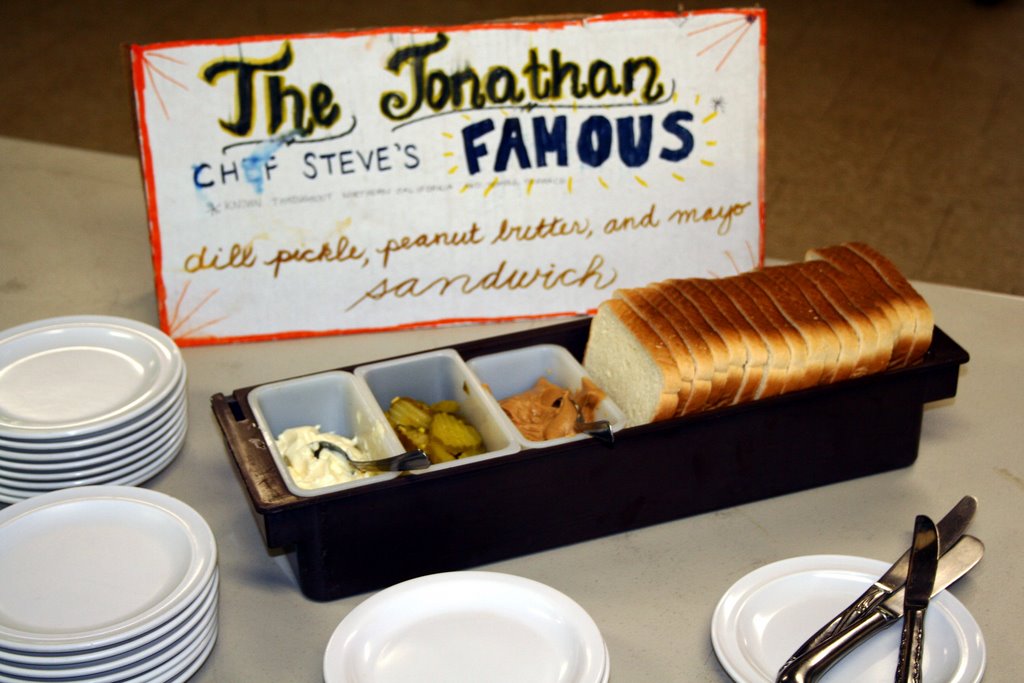 On Thursday each year, we offer peanut butter, dill pickle and mayonnaise sandwiches to the campers as an adventuresome alternative to grilled cheese. Although fewer than 10 accept the challenge each year, everyone now knows my favorite peanut butter sandwich!
Last Thursday and Friday the cooks persistently informed that we needed to make a Safeway run. We were already running out of catsup, margarine, white sugar, vegetable oil and dry cereal.
It's human nature. The cooks see that we're out of one or more products and assume that we need to run to the market and replenish the cupboards. I know that my cooks had the camp's best interest in kind when they made the suggestion.
But I had one consistent answer throughout the week: "No, we'll make do."
As chef, I have a job to perform. Budget and the need to use excess stock drove my response. Although I came in about $300 under budget for the week, I saw little need to spend more money. I knew with a little ingenuity, we'd make do.
There are several reasons for running low on stock. This year, the 20 extra campers caught us all by surprise late in the week before camp. We used the last 32 boxes of cereal Friday morning. I had cut my cereal order from five cases to four because the original estimate was for 140 campers and staff, not 165.
I generally buy a one-gallon jug of oil for the week. The olive-vegetable oil mixture is great for salads. But when the jug starts to run on empty, I look for alternatives. Wednesday or Thursday, I instructed my salad cook to assemble a tomato-cucumber salad.
Instead of mixing a vinaigrette dressing, I had her thin the creamy Italian dressing with cider vinegar and milk. It worked well. This was a good use of creamy Italian because we always have one or two quarts left at the end of camp.
With few exceptions -- margarine and cereal among them -- we substituted stock on hand for the missing items. I had my baker use raisin brand and bran flakes in place of the rolled oats for the apple crisp topping. We purchased margarine for toast only. Bacon grease worked well on Friday (we don't serve bacon until Friday).
We served oatmeal for the first time in five years Friday. As an aside, I plan to serve oatmeal maybe two or three days next year. It was very popular.
A word to the wise: Watch your stock. For many dishes, margarine, shortening and oil are interchangeable. But a drive to conserve salad oil, for instance, may push the cooks into using greater quantities of margarine. As chef, you need to constantly balance like products. Ask, "Is margarine best for this menu item?" Or, "Can I use shortening or bacon fat?"
Camp -- Home Now
 We served pork roast with caramelized apples at the senior camper banquet Thursday evening.
We arrived home about 7 p.m. last night. I'm showered, rested and heading off to worship. I'll post more pictures and thoughts about the camp kitchen this afternoon -- after I purchase a new USB cable for the camera (left it in the camp office!).
Thursday, July 06, 2006
Camp -- Thomas Jefferson Frittata
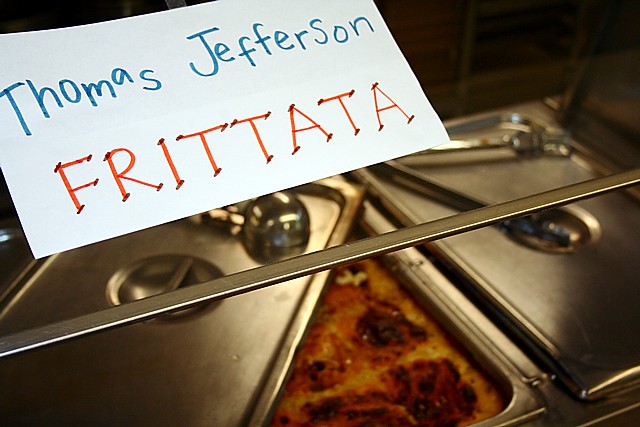 What do you do with two pans of leftover macaroni and cheese?
The answer: re-package and serve it for breakfast! Thomas Jefferson frittata to be precise. While not a true frittata, our leftover mac and cheese woke a few kids up this morning. It got most thinking, "What's the connection between Jefferson and mac and cheese?" (Jefferson is credited with bringing the first pasta machine to the U.S. from Italy in 1787.)
A slice of true frittata may have been nice next to an oven fresh cinnamon roll and 2-ounce sausage link. But remember, we didn't do anything to the mac and cheese -- only re-packaged it. In the end, 165 kids and adults only ate 24 servings.
I'll have more on leftovers later. Today is "catch up day" in the Northern California FC Camp kitchen.
Wednesday, July 05, 2006
Camp -- Tacos
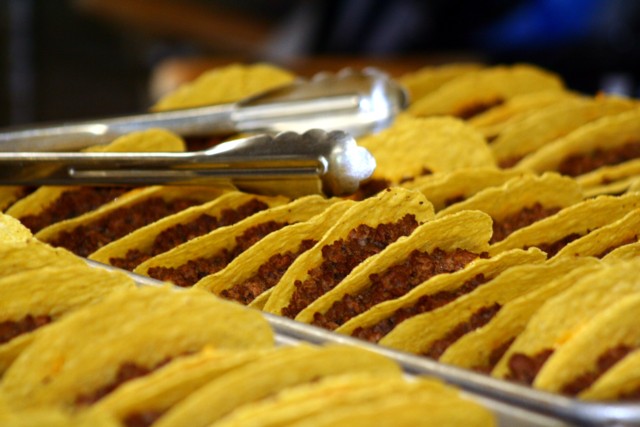 Beef tacos are always popular at camp. We prepared 200 tacos (the number of taco shells that come in a box!) for lunch and ran out after seconds. At Northern California FC Camp, we start the kids on one taco, then call seconds after everyone has gone through the line once. There were no leftovers.
BEEF TACOS
22 pounds lean ground beef
2-3/4 cups taco seasoning
200 taco shells
6 pounds cheddar cheese, grated
5-7/8 pounds lettuce, shredded
3-1/2 pounds onion, chopped
3-1/4 quarts salsa
Cook beef until beef loses its pink color; stir to break apart. Drain fat. Add taco seasoning to beef. Saute 5 minutes. CCP: Internal temperature must reach 155 deg F or higher for 15 seconds. CCP: Hold at 135 deg F or higher.
Arrange taco shells on sheet pans. Using a convection oven, bake 2 to 3 minutes at 325 deg F on high fan, open vent until just heated. Place 1/4-cup meat in each taco; line up next to each other in steam table pan. CCP: Hold for service at 135 deg F or higher. Just before serving, top each taco with 2 tablespoons cheese, 2-1/3 tablespoons lettuce, 2 teaspoons onions, and 1 tablespoon taco sauce.
Serving Ideas: Serve 2 tacos per portion. Acceptability is approx 125% when 1 taco is served for firsts and when seconds are considered.
Notes: Substitute ground chicken or turkey for beef if desired.
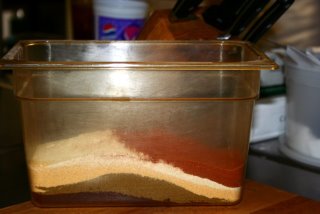
TACO SEASONING
1/4 cup chili powder
1/4 cup ground cumin
1/4 cup dried oregano
1/4 cup garlic powder
1/4 cup onion powder
2 tablespoons cayenne pepper
2 tablespoons kosher salt
Mix; store in air-tight container. Use 2 tablespoons per pound of cooked ground meat. Add water or stock to moisten; heat to 165 deg F for 15 seconds.
Yield: 2-1/2 cups
Serving Ideas: Substitute ground chipotle pepper for a smoky flavor.
Tuesday, July 04, 2006
Camp -- BBQ Chicken Dinner
And just in case you're interested, the screaming hasn't stopped. It seems to be a natural part of camp! Right now, I've got a group of 4th and 5th grade girls singing, "Guacamole, burrito, cinnamon twist," outside the office door. I'm not sure what it means -- sounds like a counselor is trying to keep them occupied by singing Taco Bell jingles...
 We closed the day with a barbecued chicken dinner and paper plates, and we gave the dishwasher the night off. CS, our head dishwasher, also attends to a cabin of 6th and 7th grade boys. He lives in the cabin each night and works in the kitchen by day. A well deserved night off seemed in order.
Camp -- Independence Day Country Breakfast
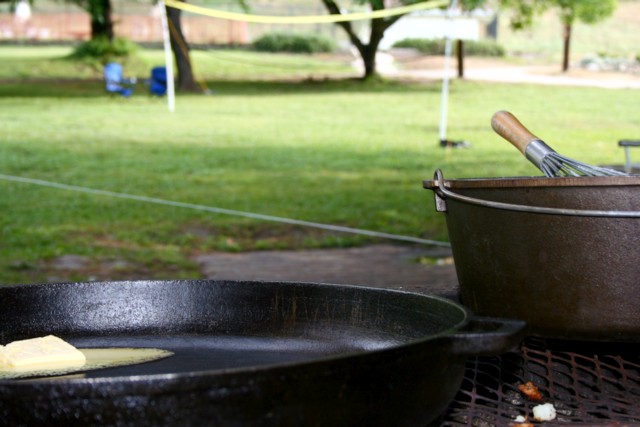 As I said a few weeks ago, we cooked breakfast outdoors this morning. A used the barbecue grill as my cooktop and prepared scrambled eggs, cottage fried potatoes, buttermilk biscuits and country gravy for 165 campers. (The breakfast bar rounded the menu with apples, oranges, juice, milk, cereal and peanut butter and jelly.)
 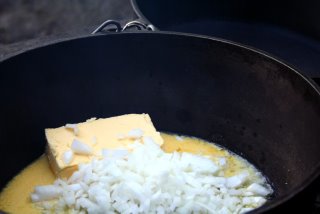 I lit 24-pounds of Kingsford charcoal at 6:40 this morning. The first thing I did was to sweat chopped onions in margarine for the cottage fried potatoes in a deep Dutch oven. I then used this oven to cook the gravy.
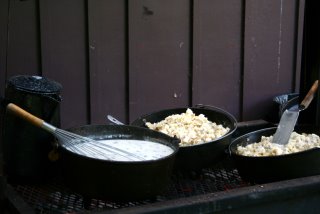
Six quarts of sausage gravy was prepared in a 14-inch deep Dutch oven. I used two 14-inch regular ovens to brown the potatoes. To save time, we use a pre-cooked diced red potato product from Sysco. Thirty pounds of potatoes were cooked in two batches. About four pounds of potatoes fit into each oven.
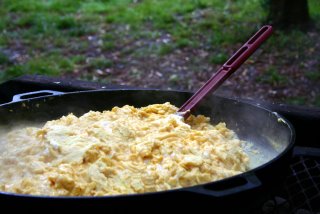
It took 18-dozen medium eggs to feed 165 campers. We scrambled the eggs in four batches in this wonderful skillet that comes with the camp. One of these days, I'm going to purchase one.
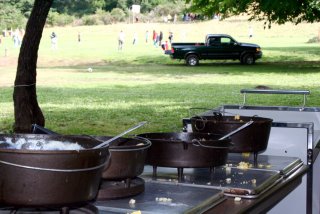
After the meal. We served breakfast from about 8:40 a.m. to 9:10 a.m. The eggs were transferred from the large skillet to a Dutch oven for service. We baked the biscuits in the kitchen to save time, but served them from a Dutch oven. The kids ate everything except for about 10 portions of the potatoes and eggs.
Monday, July 03, 2006
Camp -- Pizza Night
As I write kids are screaming up in the amphitheater (do you see a common thread developing here!). It's Fear Factor...
Tonight was pizza night. This in one of the items that I love to prepare from scratch. Since I couldn't find the dough hook or the rolling pin, I mixed and kneaded a double recipe by hand. I know that these items were around last year, because I used them for the pizza dough and the cinnamon rolls.
I found the dough hook deep behind the mixer stand, almost under the ice machine (the two are located side-by-side). The rolling pin was buried under the large center work table that's in front of the range. My first though was that the camp had disposed of these items. I had visions of rolling pizza dough with a can or bottle!
At the suggestion of my second cook, we prepared these pizzas this year:
4 cheese pizzas
3 chicken pizzas
3 combination pizzas
Unlike past years, we didn't prepare pepperoni pizza tonight. It was time for a change. Three to five pounds of pre-cooked chicken is sufficient for the three pizzas. We buy a Sysco product that comes packed two 5-pound bags per box. The pizzas are cut 4x5. Off 200 servings, 23 were left oven. This meal is the most popular of the week.
Tonight was pizza night. This in one of the items that I love to prepare from scratch. Since I couldn't find the dough hook or the rolling pin, I mixed and kneaded a double recipe by hand. I know that these items were around last year, because I used them for the pizza dough and the cinnamon rolls.
I found the dough hook deep behind the mixer stand, almost under the ice machine (the two are located side-by-side). The rolling pin was buried under the large center work table that's in front of the range. My first though was that the camp had disposed of these items. I had visions of rolling pizza dough with a can or bottle!
At the suggestion of my second cook, we prepared these pizzas this year:
4 cheese pizzas
3 chicken pizzas
3 combination pizzas
Unlike past years, we didn't prepare pepperoni pizza tonight. It was time for a change. Three to five pounds of pre-cooked chicken is sufficient for the three pizzas. We buy a Sysco product that comes packed two 5-pound bags per box. The pizzas are cut 4x5. Off 200 servings, 23 were left oven. This meal is the most popular of the week.
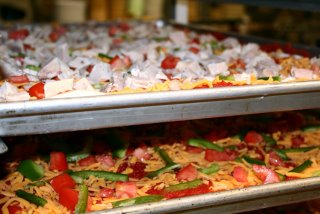
PEPPERONI PIZZA
2-3/8 ounces active dry yeast
1-1/8 cups warm water
1-1/2 quarts cold water
6-5/8 pounds bread flour
1 ounce salt
2-1/3 ounces sugar
1-1/2 cups olive oil, divided
1 gallons pizza sauce
4 pounds mozzarella cheese, shredded
1 pound sliced pepperoni
7 ounces Parmesan cheese
Sprinkle yeast over water. Do not use temperatures above 110 deg F. Mix well. Let stand 5 minutes, stir. Place water, flour, salt, sugar and olive oil in mixer bowl in order listed. Add yeast solution. Using a dough hook, mix at low speed about 8 minutes until dough is smooth and elastic. Dough temperature should be 86 deg F to 88 deg F.
Divide dough; shape into 4 (2-pound 2-ounce) balls. Cover; let rise in warm place 1 to 1-1/2 hours or until double in bulk. Coat bottom and sides of each pan with 1 tablespoon olive oil.
Place dough balls on lightly floured working surface. Roll out each ball to 1/8-inch thickness. Transfer dough to 18x26-in sheet pans pushing dough slightly up edges of pan. Using 1 tablespoon oil per pan, lightly brush dough. Gently prick dough to prevent bubbling.
Spread 1 quart sauce evenly over dough in each pan. Sprinkle 1 quart shredded cheese over each pan. Thinly slice pepperoni; evenly distribute 4 ounces over cheese in each pan. Sprinkle 1/2 cup grated cheese over mixture in each pan.
Using a convection oven, bake 8 minutes at 450 deg F on high fan, closed vent or until crust is browned and cheese starts to turn golden. Cut each sheet pan 4 by 5. CCP: Hold for service at 135 deg F or higher.
Serving Ideas: This recipe prepares 5 (18x26-in) sheet pans. For 150 campers, prepare 9-10 sheet pans. Serve 1 slice for firsts before calling seconds. Acceptability is approx 115-120%.
This recipe takes about 3-4 hours to set the dough, let it ferment, punch it and roll out the pizzas. You should have sufficient time to work the dough if you activate the yeast at 2:30 p.m. for a 5:30 p.m. dinner. Do not activate the yeast any later than 2:30 p.m. It will take 2 batches as the mixer cannot accommodate any more than 1 recipe. Prepare 1 full recipe for each batch. Each recipe will yield 4-1/2 to 5 sheets of pizza, depending on how efficiently you work.
For cheese pizza, omit the pepperoni.
Sunday, July 02, 2006
Camp -- Opening Meal Sunday
As I write kids are screaming up in the amphitheater, about 100 yards from the office. It's opening night rally ...
Opening meal this year was much the same as last year. The menu didn't change. So you can look up last year's comments for the chicken tender, barbecue, roasted potato wedge and broccoli meal.
I have the same 11 staff as last year, save one. As I've said last year, don't fret over the number of staff assigned to the kitchen, especially when working with volunteers. Most are taking a hard earned vacation from work to help feed hungry campers. They'll appreciate a break now and then.
I've assigned positions as follows:
Steve -- Chef (5th year)
CD -- 2nd cook (5th year)
AK -- 3rd cook (2nd year)
HB -- Salads and baker (2nd year)
DK -- Kitchen helper (5th year)
EM -- Dining room host (5th year)
CS -- Dishwasher and utility (3rd year)
AK -- Dishwasher and utility (2nd year)
PD -- Dishwasher and utility (2nd year)
DB -- Dishwasher and utility (2nd year)
KM -- Dishwasher and utility (1st year)
The afternoon started with an staff meeting at 2 p.m. in the kitchen. I explained the flow of the dinner prep and made individual assignments. I also demonstrated the proper method to mix the sanitizer solution. (See last year's comments on sanitizer.)
In addition to dinner prep, I started the staff on three additional items. The salad bar is always a hit at FC Camp. HB sliced 15 tomatoes and prepared a marinade while I sliced 8 cucumbers for cucumber and onions. These two salads anchor the salad bar along with a tossed salad. Four tomatoes slices were left at the end of dinner. Tomatoes are much more popular than the cucumbers.
We also made chocolate chip cookies for lunch tomorrow and panned the sausage for breakfast. The morning cooks return to the kitchen at 7 a.m.
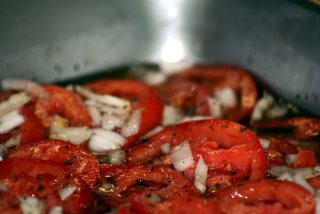 MARINATED TOTATOES
6 pounds fresh tomatoes
3/4 cup onion -- chopped
3 cloves minced garlic
1/3 cup parsley -- chopped
1 tablespoon dried basil -- crumbled
1 tablespoon granulated sugar
2 teaspoons salt
1 1/2 teaspoons black pepper
2 cups olive oil
1 1/2 cups red wine or balsamic vinegar
Cut tomatoes into 1/4-inch slices. Shingle in 15 sliced tomatoes in bottom of 2-in hotel pan.
Combine remaining ingredients. Pour over tomato slices. Cover; refrigerate at least 3 hours or until flavors are well blended. Keep refrigerated until ready to serve. CCP: Hold for service at 41-deg. F or lower.
Serving Ideas : Self serve on the salad bar. This item is very popular with the adults and senior campers. Plan on 1 to 2 (2-in) hotel pans per dinner meal.
Notes: (1) Figure 15 medium-to-large tomatoes per 6 pounds. Figure 60 to 75 slices from 15 medium-to-large tomatoes. (2) 1/3-cup fresh basil may be substituted for dried. Salad oil may be substituted for olive oil. (3) Refrigerator leftover marinated tomatoes at 41-deg or lower.
Variation: Fresh Tomato Relish -- Cut peeled tomatoes in half and gently squeeze out most of the seeds. Chop coarsely and stir into the marinade.
Opening meal this year was much the same as last year. The menu didn't change. So you can look up last year's comments for the chicken tender, barbecue, roasted potato wedge and broccoli meal.
I have the same 11 staff as last year, save one. As I've said last year, don't fret over the number of staff assigned to the kitchen, especially when working with volunteers. Most are taking a hard earned vacation from work to help feed hungry campers. They'll appreciate a break now and then.
I've assigned positions as follows:
Steve -- Chef (5th year)
CD -- 2nd cook (5th year)
AK -- 3rd cook (2nd year)
HB -- Salads and baker (2nd year)
DK -- Kitchen helper (5th year)
EM -- Dining room host (5th year)
CS -- Dishwasher and utility (3rd year)
AK -- Dishwasher and utility (2nd year)
PD -- Dishwasher and utility (2nd year)
DB -- Dishwasher and utility (2nd year)
KM -- Dishwasher and utility (1st year)
The afternoon started with an staff meeting at 2 p.m. in the kitchen. I explained the flow of the dinner prep and made individual assignments. I also demonstrated the proper method to mix the sanitizer solution. (See last year's comments on sanitizer.)
In addition to dinner prep, I started the staff on three additional items. The salad bar is always a hit at FC Camp. HB sliced 15 tomatoes and prepared a marinade while I sliced 8 cucumbers for cucumber and onions. These two salads anchor the salad bar along with a tossed salad. Four tomatoes slices were left at the end of dinner. Tomatoes are much more popular than the cucumbers.
We also made chocolate chip cookies for lunch tomorrow and panned the sausage for breakfast. The morning cooks return to the kitchen at 7 a.m.
 MARINATED TOTATOES
6 pounds fresh tomatoes
3/4 cup onion -- chopped
3 cloves minced garlic
1/3 cup parsley -- chopped
1 tablespoon dried basil -- crumbled
1 tablespoon granulated sugar
2 teaspoons salt
1 1/2 teaspoons black pepper
2 cups olive oil
1 1/2 cups red wine or balsamic vinegar
Cut tomatoes into 1/4-inch slices. Shingle in 15 sliced tomatoes in bottom of 2-in hotel pan.
Combine remaining ingredients. Pour over tomato slices. Cover; refrigerate at least 3 hours or until flavors are well blended. Keep refrigerated until ready to serve. CCP: Hold for service at 41-deg. F or lower.
Serving Ideas : Self serve on the salad bar. This item is very popular with the adults and senior campers. Plan on 1 to 2 (2-in) hotel pans per dinner meal.
Notes: (1) Figure 15 medium-to-large tomatoes per 6 pounds. Figure 60 to 75 slices from 15 medium-to-large tomatoes. (2) 1/3-cup fresh basil may be substituted for dried. Salad oil may be substituted for olive oil. (3) Refrigerator leftover marinated tomatoes at 41-deg or lower.
Variation: Fresh Tomato Relish -- Cut peeled tomatoes in half and gently squeeze out most of the seeds. Chop coarsely and stir into the marinade.
Saturday, July 01, 2006
Camp -- Pizza, More Campers and Training
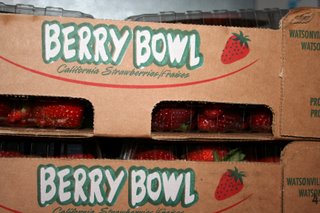 Good things are in store for the week!
Saturday is training day for kitchen staff at Northern California FC Camp. With the food stowed and the kitchen ready for Sunday dinner, I held a training session for the cooks from 5 to 6 p.m. this evening. The key here is to cover food safety basics, make job assignments and orient all staff to the kitchen, including safety (fire evacuation, etc.). Today's training only took an hour as most of my staff returned from 2005.
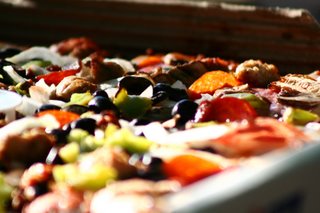 Roundtable Pizza hosted dinner tonight. Staff provide their own breakfast and lunch tomorrow. We start cooking dinner at 2 p.m. Sunday and serve the meal after evening worship.
I received news yesterday morning that out camper count unexpectedly climbed to 160 during this past week. We have 20 extra mouths to feed all week. Although this could mean we have to run to Costco Santa Cruz and purchase additional food, I believe we'll be good. I purchased the same quantity of food as last year. Based on the leftovers we had each meal last year, we have sufficient cushion to absorb the extra campers (a split between kids and counselors).
The few items that I cut from last year -- like the chicken tenders and corn dogs -- will good. These were items that I over-purchased and needed to trip. At this point I feel confident that we'll have enough food for the week. Costco is 10 mile south of Felton in the rare event that we need extra food.
Camp -- A Morning Surprise
An early morning call from my camp director brought news for which I wasn't prepared. Sysco made an early delivery. The food service company showed up at 8:30 a.m. to drop 155 cases of food. It looks like our food was loaded on the tail end of the trailer. The driver told me that he had 14 drops today, spread from Santa Cruz to San Jose. I wander how the holiday weekend impacted scheduling.
Sysco's been early in the past, but never at the crack of dawn. The first year (2002), they showed up at 11:30 a.m. In the succeeding years they've arrived with the food in the early afternoon. So this was a shock when Mike called me on my cell phone.
Fortunately, we had stayed at Jaye's Timberlane Resort in Ben Lomond last night, two miles north of here. I dashed over to Daybreak Camp and had all perishables stowed in the walk-in and freezer by 9:30 a.m. This gave me a chance to unload the food that I purchased at Smart and Final Thursday and to unload my cast iron for outdoor meals. Although our account is tagged COD, the driver departed at 9:30 without check in hand. I still have to make payment arrangements as the checkbook wasn't due to arrive until 1 p.m.
This is something that I've worked at to avoid. Each year as I prepare for camp, I give my Sysco representative a list of delivery needs. (To be fair to Sysco, I haven't talked to her yet today.) I make sure that a Saturday delivery is okay (never had an issue with this), and I make sure that the truck doesn't arrive any sooner than 1 p.m.
I also remind Sysco each year of the bridge and its weight limitations. A 35-foot trailer is the longest that Sysco can send over the bridge, which they did this year. We had one year where it took the driver over 30 minutes to make the turn out of the parking lot onto the bridge.
Sysco's early arrival worked out. The camp that had rented the facilities this last week -- an outreach group from Walnut Creek -- checked out yesterday. So my vision of putting food away while the departing group cooked breakfast and cleaned the kitchen never materialized.
I also found out from the camp caretaker that the last group left a sizable donation for us. It's always nice to give and accept such donations. Each year we leave around $150 to $200 in food behind to the next group. The donation included four crates of milk (over 200 cartons), seven gallons of Costco milk, seven dozen eggs (three flats) and plenty of produce. We'll put the food to good use.
Sysco's been early in the past, but never at the crack of dawn. The first year (2002), they showed up at 11:30 a.m. In the succeeding years they've arrived with the food in the early afternoon. So this was a shock when Mike called me on my cell phone.
Fortunately, we had stayed at Jaye's Timberlane Resort in Ben Lomond last night, two miles north of here. I dashed over to Daybreak Camp and had all perishables stowed in the walk-in and freezer by 9:30 a.m. This gave me a chance to unload the food that I purchased at Smart and Final Thursday and to unload my cast iron for outdoor meals. Although our account is tagged COD, the driver departed at 9:30 without check in hand. I still have to make payment arrangements as the checkbook wasn't due to arrive until 1 p.m.
This is something that I've worked at to avoid. Each year as I prepare for camp, I give my Sysco representative a list of delivery needs. (To be fair to Sysco, I haven't talked to her yet today.) I make sure that a Saturday delivery is okay (never had an issue with this), and I make sure that the truck doesn't arrive any sooner than 1 p.m.
I also remind Sysco each year of the bridge and its weight limitations. A 35-foot trailer is the longest that Sysco can send over the bridge, which they did this year. We had one year where it took the driver over 30 minutes to make the turn out of the parking lot onto the bridge.
Sysco's early arrival worked out. The camp that had rented the facilities this last week -- an outreach group from Walnut Creek -- checked out yesterday. So my vision of putting food away while the departing group cooked breakfast and cleaned the kitchen never materialized.
I also found out from the camp caretaker that the last group left a sizable donation for us. It's always nice to give and accept such donations. Each year we leave around $150 to $200 in food behind to the next group. The donation included four crates of milk (over 200 cartons), seven gallons of Costco milk, seven dozen eggs (three flats) and plenty of produce. We'll put the food to good use.
Tuesday, June 27, 2006
Finding Inspiration for the Camp Menu
I glean menu and recipe ideas from many sources. Professional trade magazines -- Foodservice Director and Food Management among them -- give me ideas that are specially suited for the institutional kitchen. Popular magazines like Sunset also provide inspiration. I can often use an idea and work it until it fits a group setting.
A photograph of an artfully arranged collection of skillets arranged on an outdoor buffet table sparked my cowboy breakfast idea. Twin stacks of blue enamel plates and a lone Dutch oven complete the display -- no fancy garnish for the dudes of the Mountain Sky Guest Ranch, near Emigrant, Montana.
This thousand-word inspiration gave me the impetuous to celebrate our nation's 230th birthday. The crisp, smoky air of the campfire will greet campers next Tuesday. Bright yellow scrambled eggs, airy biscuits smothered in sausage gravy and gallons of cowboy coffee (hot chocolate for campers) will kick off our celebration next week. The meal will be cooked in cast iron that's stood the test of time from the colonial hearth to the Western range to the backyards of today.
A photograph of an artfully arranged collection of skillets arranged on an outdoor buffet table sparked my cowboy breakfast idea. Twin stacks of blue enamel plates and a lone Dutch oven complete the display -- no fancy garnish for the dudes of the Mountain Sky Guest Ranch, near Emigrant, Montana.
This thousand-word inspiration gave me the impetuous to celebrate our nation's 230th birthday. The crisp, smoky air of the campfire will greet campers next Tuesday. Bright yellow scrambled eggs, airy biscuits smothered in sausage gravy and gallons of cowboy coffee (hot chocolate for campers) will kick off our celebration next week. The meal will be cooked in cast iron that's stood the test of time from the colonial hearth to the Western range to the backyards of today.
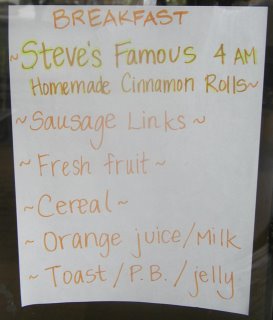
Two years ago, campers kept saying "That's what 4 a.m. rolls look like!" as they walked through the cafeteria line. Their response puzzled me all morning until I walked out into the dining area and saw this hand-printed menu.
Inspiration for camp menu ideas can come from many sources. Television programs, cookbooks and magazines have helped my over 35-year culinary career. The one thing that's worked best for me since the late 1980s has been a series of culinary notebooks.
I keep the notebook handy. Now that I'm commuting to Sacramento each day, the 200-page composition book stays in my daypack. I record ideas -- often gathered from professional magazines on my desk -- and clippings on my hour-long commute home. My 18-notebook collection is full of ideas.
It doesn't matter if the idea comes from TV or print. Shows like Al Rocker's Rocker on the Road can give wonderful ideas. Take Douglas Coffin's New Haven, Conn.-based Big Green Pizza Truck (the show that aired last January). I may not be able to restore a 1946 International Harvester flat-bed truck. But the pizza menu idea will come in handy one day.
They key is to clip ideas and place them in your culinary scrapbook. Soon your collection of ideas, complete with thousand-work photographs will have you cooking for a herd of hungry camper.
Monday, June 26, 2006
Cowboy Independence Day Breakfast
 Independence Day is next Tuesday, July 4, 2006. It's Day 3 of Northern California FC Camp in Felton. What better way to start the day that a cowboy breakfast.
Here's the plan:
- Serve breakfast from cast iron Dutch ovens and skillets.
- Fire from charcoal briquettes will cook the breakfast.
- Use the planned menu -- no need to change the meal. Tuesday's menu easily converts to a cowboy breakfast.
- Attire cooks in straw cowboy hats and red bandanas.
Fruit cups
Scrambled eggs
Buttermilk biscuits
Sausage gravy
Hot chocolate
Cowboy coffee (the real stuff!)
It's a simple breakfast that the campers will enjoy. The eggs and potatoes fit into large range-sized skillets. Dutch ovens make the perfect cooking vessel for the biscuits and gravy. A stock pot will hold the hot chocolate and a Navy-surplus coffee boiler is a perfect match for the joe.
 Ring the dinner triange, holler "Come an' get it" and hide the breakfast cereal bowl packs and bananas. This meal's all about gut fillin', rib sticken' grub.
The picture to the left shows my favorite piece of cast iron at Daybreak Camp. This is a 2004 shot of a roux slowly browning over the rangetop.
I'll report back next week. July 4th opens with a cookout. We end the day with grilled chicken on the barbecue and scalloped potatoes and apple crisp in Dutch ovens.
Friday, June 23, 2006
Finding the Right Balance Between Scratch Cooking and Ready-to-Use Food
 Two lessons emerged from my first year as chef for Northern California FC Camp. I knew that to keep my sanity (and bring my work-day under 12 hours), I had to train my staff and provide a pleasant work environment for the staff. After all, most of us use vacation time from work. By year two, I was able to let go of some of my cooking duties and focus on leadership.
I now believe the most important lesson was the realization that I had to change my menu writing ways if I was to keep year-to-year turnover to a minimum. Turnover of kitchen staff didn’t level out until last year (the forth year). It took me three years to develop a menu that satisfied my desire to prepare scratched-cooked food, temper the long work days and make use of volunteers who don’t have professional cooking experience.
When my staff kept asking me “Can I come back next year?” last July, I knew that I had met my three-fold test. I attribute this to purchasing a balanced mix of raw ingredients and ready-to-use food. (To be fair, a liberal food budget and a former director’s keen ability to recruit quality volunteers also played a role.)
Volunteer staff have a tendency to give you the “1,000-potato stare” when the produce man unloads three burlap sacks of Idaho’s finest potatoes. The musty sacks can only mean one thing: a potato-peeling party. (And don’t forget my wrestling match with the mandoline.)
Frozen hash browns, dehydrated scalloped potatoes and par-cooked red potatoes are acceptable substitutes for fresh. I’ve purchased the hash browns from year-one. From the beginning, I didn’t have a desire to shred 40 pounds of potatoes by hand (Daybreak has few electric appliances). I introduced the scallops and the reds last year. Both are wonderful products and great timesavers.
Finding the balance between scratch cooking and ready-to-use products
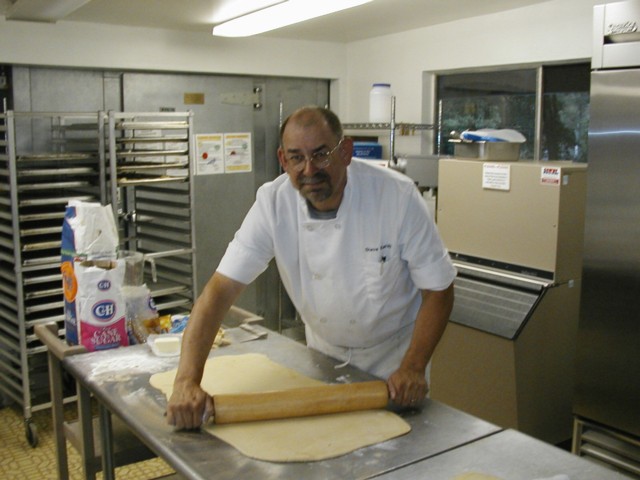 You have to determine which products are best scratch cooked for your menu. I place the focus on several signature items, like my 4 a.m. cinnamon rolls. This breakfast takes me back to my Navy days when I was a baker. I enjoy getting up at oh-dark-thirty one morning to set the rich sweet dough. (The quite morning is punctuated by the deer grazing in the mist of morning sprinklers.)
I purchase ready-to-use items for several reasons. Many are purchased purely for convenience. Campers are familiar with imitation maple syrup and bottle Kraft barbecue sauce. I could prepare superior syrup or barbecue sauce from scratch. But I don’t have the time, nor the inclination to add a dozen ingredients to the inventory.
Chef-choice cookies (chocolate chip are winners -- don’t waste your time on oatmeal raisin) were featured on the lunch menu until 2003. Then last year I purchased Sysco cookie mix and chocolate chips. At the suggestion of staff we baked sheet pan chocolate chip “brownie” bars on Monday, Wednesday and Friday. I had found an easy-to-prepare product that the kids loved (so much so that my dining room host assigned an adult monitor to ration the cookies!).
I do have limitations. I draw the line at frozen lasagna and frozen French toast or pancakes. They save time. But we’ve had four years to practice these menu items. My second cook is an expert lasagna maker. As soon as the sauce is ready, filling mixed and cheeses grated, a four or five person team can build eight shallow hotel pans of lasagna in less than an hour.
And I think it’s a culinary misdemeanor to waste your food dollar on frozen pancakes or French toast. Scratch-made breakfast staples are superior to their ready-to-cook cousins. I could use a quality pancake mix (Kusteaz is among the best). But I’ve been mixing Armed Forces recipe number D-25 for more than three decades. It’s engraved in my brain -- so why change now? (Don’t get me started on frozen waffles -- too many bad experiences from my large institutional kitchen job!)
The key is to take my example of a working camp menu write your own. Your campers may bring a different set of culinary experiences to the dining room table. With a little practice, you’ll find the right mix of scratch items and store-bought foods.
To be continued ...
Monday, June 19, 2006
A Few Notes on My Camp Menu
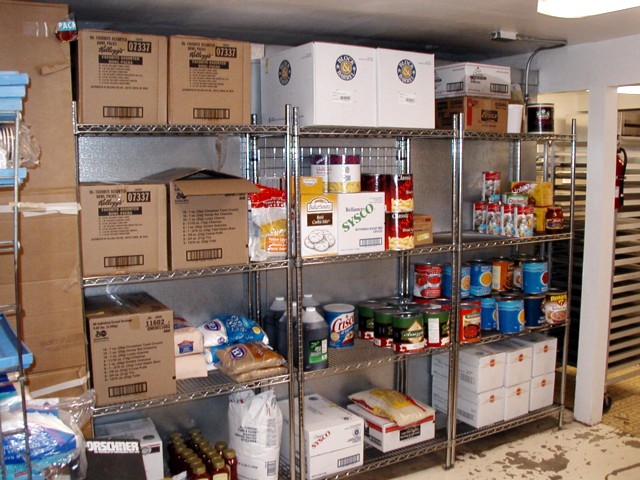 We live in an age where it's possible to buy ready-made meals for the camp kitchen. Given an unlimited food service budget, you could equip the kitchen with a convection oven, sink and freezer. One cook could prepare 150 meals three times each day with little thought given to how each dish was cooked.
This scenario isn't new. The U.S. Army introduced its T-Ration in the years leading up to the Gulf War. And in recent years, the U.S. Navy has been working on its Advanced Foods option for shipboard food service. These systems are designed to simplify training, reduce labor needs and simplify logistics.
While this idea may appeal from a management point-of-view, it's a costly alternative that few camps can afford. I raise the all-frozen meal alternative only to illustrate this point: That it's possible to cook quality camp meals by finding a balance between scratch-based cooking and purchasing ready-to-use food products for the menu.
The five-year camp menu development project
The FC Camp menu has slowly evolved over the last five years. It's been my long-term culinary project, if you will. What started as a traditional menu with a made-from-scratch focus has slowly turned into a menu where purchased foods compliment kitchen-prepared menu items.
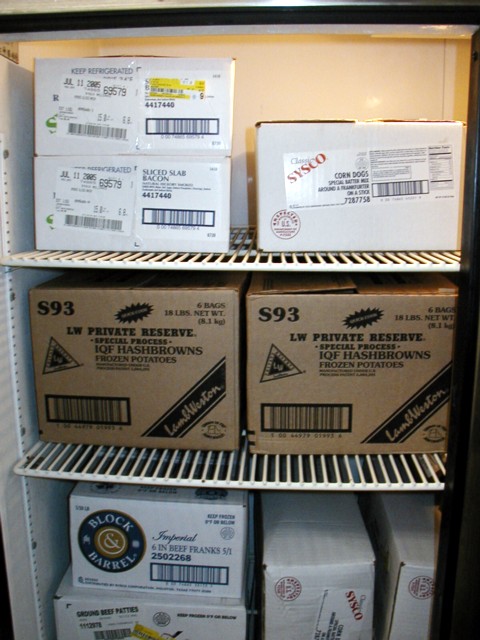 This approach has worked well for the camp. It balances the need for experienced cooks with the reality of using volunteer labor. Most of the cooks at the Northern California FC Camp bring little commercial food service experience to the kitchen. This isn't a criticism -- it's the simple truth of relying on volunteers to staff a camp kitchen.
A scratched-based menu requires more experience that I have found in the volunteers. (I should note that the food service staff at FC Camp are among the hardest workers I've seen.) I found in my first year that my presence was required in the camp kitchen 12 to 15 hours. As the chief cook for the camp, I brought some 80 percent of the culinary know how to the kitchen.
Each cook and dining room worker contributed varying abilities. My sous chef -- and second in charge -- had the most experience. A decade in school food service gave her the ability to comfortably navigate a commercial kitchen. She was a blessing.
The remaining cooks and dining room workers mostly brought home cooking experience to the kitchen. The hardest worker of them all -- and the daughter of my sous chef -- was the hardest worker of them all. Assigned as the dining room host for the five years now, she's a natural with the kids. And she has the uncanny ability to get each organized in the dining room.
 I found that a willingness to learn and work hard were much more valuable than years of food service experience. (See my index of lessons from a week-long children's Bible camp kitchen for more thoughts on my philosophy.)
Two lessons emerged after that first year: First, if I was to keep my sanity (and keep my work- day under 12 hours), I had to train my staff. I also had to provide a pleasant work environment for the staff. After all, most of us are using vacation time from work. By year two, I was able to let go of some of my cooking duties and focus on leadership.
But I now believe the most important lesson was the realization that I had to change my menu writing ways if I was to keep year-to-year turnover to a minimum.
To be continued ...
Tuesday, June 13, 2006
Menu for the Reno Rodeo Cattle Drive
I had intended to post this blog last Sunday, but a sunburn got the better of me ...
Guests from 12 states (and the Netherlands!) will savor great chuckwagon grub next week on the Reno Rodeo Cattle Drive. Along the way, city-slickers will enjoy 11 or 12 great meals served from a modern chuckwagon (a catering trailer in real life). During the Drive, the chuckwagon crew will serve over 750 pounds of meat, 100 gallons of strong, cowboy coffee, and 50 dozen eggs.
There's only one rule: "Please do not ride your horses near the kitchen or bar. The West is littered with gravesites of those who have made this mistake."
The Cattle Drive runs June 11 to 15, 2006.
Reno Rodeo Cattle Drive Menu 2006
Breakfasts: Eggs, Hashbrowns, Variety of meats (Ham, Sausage, Bacon), Biscuits & Gravy, Muffins, French Toast, Sourdough Hotcakes, Fresh Fruit.
Lunches: Cold Cut Sandwiches, Fruit & Veggies out on the trail.
Sunday Dinner: Prime Rib, Chicken, Dutch Oven Potatoes, Black Bean Corn Stew, Dutch Oven Rolls, Peach Cobbler.
Monday Dinner: Tri-Tip, Herb Chicken, Heaven in a Pot (Beans), Mixed Veggies, Dutch Oven Rolls and Dutch Oven Chocolate Dessert.
Tuesday Dinner: Cornish Game Hens, Venison Stew, Corn Muffins, Zucchini and Bread Pudding.
Wednesday Dinner: Turkey, Pork Tenderloin, Stuffing, Mashed Potatoes, Green Beans, Cranberry Sauce, Dutch Oven Rolls and Pumpkin Pie.
All dinners include fruit, salad & bread.
Guests from 12 states (and the Netherlands!) will savor great chuckwagon grub next week on the Reno Rodeo Cattle Drive. Along the way, city-slickers will enjoy 11 or 12 great meals served from a modern chuckwagon (a catering trailer in real life). During the Drive, the chuckwagon crew will serve over 750 pounds of meat, 100 gallons of strong, cowboy coffee, and 50 dozen eggs.
There's only one rule: "Please do not ride your horses near the kitchen or bar. The West is littered with gravesites of those who have made this mistake."
The Cattle Drive runs June 11 to 15, 2006.
Reno Rodeo Cattle Drive Menu 2006
Breakfasts: Eggs, Hashbrowns, Variety of meats (Ham, Sausage, Bacon), Biscuits & Gravy, Muffins, French Toast, Sourdough Hotcakes, Fresh Fruit.
Lunches: Cold Cut Sandwiches, Fruit & Veggies out on the trail.
Sunday Dinner: Prime Rib, Chicken, Dutch Oven Potatoes, Black Bean Corn Stew, Dutch Oven Rolls, Peach Cobbler.
Monday Dinner: Tri-Tip, Herb Chicken, Heaven in a Pot (Beans), Mixed Veggies, Dutch Oven Rolls and Dutch Oven Chocolate Dessert.
Tuesday Dinner: Cornish Game Hens, Venison Stew, Corn Muffins, Zucchini and Bread Pudding.
Wednesday Dinner: Turkey, Pork Tenderloin, Stuffing, Mashed Potatoes, Green Beans, Cranberry Sauce, Dutch Oven Rolls and Pumpkin Pie.
All dinners include fruit, salad & bread.
Subscribe to:
Comments (Atom)


